LED Lighting for Tunnels - High-Quality Professional Supplier | MASONLED

LED lighting for tunnels, specialized in robust and reliable solutions. Our products ensure optimal visibility and safety with long-lasting performance, designed to withstand demanding environments and reduce maintenance needs.

+86-769-89950999

APPLICATION

MasonLED delivers tailored lighting solutions for streets, warehouses, factories, parking lots, and cold storage. With custom ODM/OEM support, we optimize optics, thermal management, and IP ratings to match your project needs – backed by 16+ years of expertise and a CNAS‑accredited lab.

LED Metro Lighting Application Technical Guide

Introduction

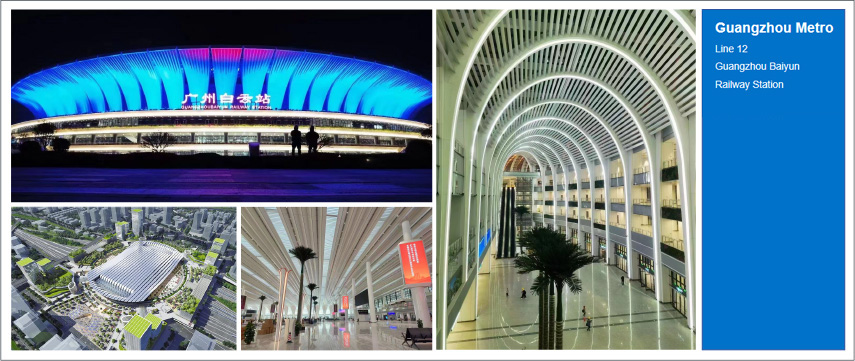
As the backbone of urban public transportation systems, metro networks carry millions of passengers daily. Lighting is not merely basic infrastructure that provides visual conditions for passengers — it is a critical factor in operational safety, passenger experience, and energy conservation. Unlike general building lighting, metro lighting faces unique challenges: 24/7 operation, enclosed underground spaces, complex electromagnetic environments, frequent vibration and impact, and constrained maintenance conditions.

The maturity of LED technology has brought revolutionary changes to metro lighting. Compared to traditional fluorescent and metal halide luminaires, LEDs offer significant advantages for metro applications: higher efficacy (≥150 lm/W), longer lifespan (≥50,000 hours), instant start, precise optical control, and intelligent control capabilities. However, metro lighting design is far more complex than general indoor lighting — station halls, platforms, tunnels, and equipment areas each have distinct functional requirements, and parameters such as illuminance, CCT, CRI, glare, flicker, and EMC are all interlinked.

This guide is intended for metro owners, design institutes, engineering contractors, facility managers, and lighting suppliers, covering standards frameworks, performance parameters, zonal lighting requirements, luminaire selection, optical design, intelligent controls, installation and maintenance, and quality assurance.

1. Standards and Regulatory Framework

1.1 GB/T 16275-2025 — Urban Rail Transit Lighting

GB/T 16275-2025 is the most fundamental national standard for urban rail transit lighting, released in 2025 as a comprehensive upgrade to the 2008 edition. This standard aims to adapt to new trends such as the widespread adoption of LED technology and the development of intelligent controls, addressing the limitations of the previous version in areas like energy efficiency metrics and light source type coverage.

Standard Evolution Path:

  • 1996 Edition: Focused solely on underground railway lighting

  • 2008 Edition: Expanded to cover the entire system (metro/light rail)

  • 2025 Edition: Added new frontier content including DC power supply and non-visual lighting

Key Technical Changes:

  • Added provisions for LED light source selection

  • Added luminaire selection requirements for different spaces

  • Added adjustable‑height luminaire selection provisions

  • Added anti-detachment requirements for luminaires in special spaces

  • Added provisions for LED driver selection

  • Added glare evaluation limits for tunnel lighting

  • Added color deviation requirements for LED lamps and luminaires

  • Added limits for flicker and stroboscopic effects

  • Revised the general color rendering index requirements for light sources

International Alignment: The revision process referenced international standards including CIE and IEC, achieving technical alignment in glare control, emergency lighting, and other metrics.

Scope: Applicable to lighting design, construction acceptance, and operation and maintenance phases of new construction/renovation projects, specifying lighting technical requirements for all functional areas from station halls and platforms to tunnels.

1.2 GB 50157-2013 — Code for Design of Metro

GB 50157-2013 is the comprehensive design code for metro engineering, with clear provisions for lighting:

  • Normal tunnel illuminance: ≥ 5 lx

  • Emergency lighting duration: ≥ 60 minutes

  • Emergency switching time: ≤ 5 seconds

1.3 GB 50034-2013 — Standard for Lighting Design of Buildings

This standard classifies metro stations as “underground traffic spaces” under the “transportation buildings” category, imposing special requirements on lighting quality and energy efficiency metrics for underground spaces.

1.4 DB44/T 1620-2015 — Design Standard for LED Lighting in Metro Spaces

A Guangdong provincial standard specifically addressing LED lighting design for metro environments. It specifies design requirements for LED lighting in various metro spaces including platforms, tunnels, stations, and train carriages — covering LED luminaire selection, layout, illuminance, CCT, energy efficiency, and maintenance.

1.5 Electromagnetic Compatibility (EMC) Standards

With dense low-voltage equipment in metro tunnels, EMC compliance is a core acceptance requirement. Key standards include:

  • GB/T 17743-2021: Limits and methods of measurement of radio disturbance characteristics of electrical lighting and similar equipment

  • GB 17625.1-2022: Electromagnetic compatibility limits — limits for harmonic current emissions, with lighting equipment required to meet Class C

  • GB 7000.1-2015: Luminaires — General requirements and tests

  • GB 17625.2, GB/Z 17625.5, GB/T 17626.8, GB/T 18595: Related EMC standards

Total harmonic distortion of luminaire current shall be ≤ 10%.

1.6 International Standards Reference

  • EN 12464-1: Defines workplace lighting requirements including road and tunnel lighting, specifying minimum illuminance levels, uniformity, and glare control

  • CIE 88: Guide for the lighting of road tunnels and underpasses

  • ANSI C136.31: Minimum vibration performance requirements for roadway lighting luminaires

2. Key Performance Parameters

2.1 Illuminance

Different functional areas of metro systems have varying illuminance requirements. The following table shows recommended illuminance values from key standards:

Area Standard Illuminance (lx) Recommended (lx) Basis
Station hall public area 200 200–300 GB 50034-2013
Ticket vending machine area — 300 GB 50034-2013
Platform waiting area 150 100–200 GB 50034-2013
Entry/exit passages 150 — GB 50034-2013
Equipment management area 300 — GB 50034-2013
Control room — 500 GB 50034-2013
Tunnel normal lighting ≥5 — GB 50157-2013
Emergency lighting ≥50 — GB 50034-2013

International Reference Values:

  • Station hall/arrival hall: 200–300 lx, uniformity ≥ 0.6

  • Platform: 200 lx, uniformity ≥ 0.4

  • Ticket vending/ATM areas: 300–500 lx

  • Control areas/gates: 200–300 lx

  • Technical areas: 150–200 lx

Adjacent area illuminance ratio: Should be controlled within a reasonable range to avoid visual discomfort caused by sudden illuminance changes.

2.2 Correlated Color Temperature (CCT)

Area Recommended CCT Notes
Station hall public area 4000–5000K 5000K cool white recommended
Platform waiting area 4000–5000K —
Rest areas 4000K Natural light
Equipment management area 4000–5500K —
Tunnel sections 4000–5000K —

Color Consistency Requirements:

  • Light source CCT in public areas such as station halls and platforms should remain consistent

  • CCT deviation controlled within ±150K

  • Color consistency SDCM ≤ 5 (ANSI standard)

2.3 Color Rendering Index (CRI)

Area CRI Requirement Basis
Station hall public area Ra ≥ 80 GB 50034-2013 Clause 4.4.1
Platform public area Ra ≥ 80 —
Ticketing area Ra ≥ 85 GB 50034-2013
Tunnel sections Ra ≥ 70 —
Safety warning signage R9 > 80 Red rendering requirement
Facial recognition areas R15 > 85 Skin tone rendering requirement

2.4 Glare Control (UGR)

Area UGR Limit Basis
Station hall ≤ 22 GB 50034-2013 Table 4.3.1
Platform ≤ 25 GB 50034-2013
Train carriage ≤ 22 —
Entry/exit passages ≤ 20 —

Glare Control Strategies:

  • Use semi-cutoff distribution to control upward light output ratio and avoid direct glare

  • Luminaires with protective covers should control maximum surface luminance

  • Tunnel lighting should use dedicated luminaires with low-glare design

2.5 Illuminance Uniformity

Area Uniformity Requirement Basis
Metro public area general lighting ≥ 0.7 DB44/T 1620-2015
Adjacent areas to task surfaces ≥ 0.5 DB44/T 1620-2015
Public areas ≥ 0.6 GB 50034-2013
Passages ≥ 0.5 GB 50034-2013
Tunnel lighting ≥ 0.7 —

2.6 Flicker

Metro lighting shall comply with the flicker requirements in Clause 4.3.5 of the standard. High-frequency LED drivers are recommended to minimize flicker effects. GB/T 16275-2025 has added new limits for flicker and stroboscopic effects.

2.7 Power Factor (PF)

Metro lighting has relatively high power factor requirements:

  • Minimum requirement: PF ≥ 0.90

  • Recommended: PF ≥ 0.95

2.8 Ingress Protection (IP) Rating

Area IP Rating Requirement Basis
Tunnel luminaires ≥ IP65 DB44/T 1620-2015
Station entrance canopy ≥ IP54 DB44/T 1620-2015
Carriage interior IP54 —

2.9 Vibration and Impact Resistance

Metro tunnels are subject to piston wind effects from trains and continuous low-frequency vibration, requiring luminaires with stable mechanical and electrical performance:

  • Vibration resistance: Tunnel luminaires shall comply with ANSI C136.31, withstanding at least 1.5G (standard) or 3.0G (high vibration) cycles

  • Impact resistance: IK10 is mandatory to withstand falling debris, maintenance tools, and mechanical impact from passing goods

  • Anti-vibration and anti-detachment: Luminaires used in high-vibration areas shall have anti-vibration and anti-detachment measures

  • Corrosion resistance: Luminaires in tunnels and depot maintenance areas shall be constructed from corrosion-resistant materials

2.10 Lifetime Requirements

  • L70 Lifetime: ≥ 50,000 hours (recommended)

  • Accelerated aging test: ≥ 7,000 hours lumen depreciation testing per LM-80

3. Zonal Lighting Requirements

3.1 Station Hall Public Area

The station hall is the primary area for ticketing, security screening, and passenger circulation. Lighting design should focus on:

  • Illuminance: 200–300 lx

  • CCT: 4000–5000K (5000K recommended)

  • CRI: Ra ≥ 80

  • UGR: ≤ 22

  • Uniformity: ≥ 0.7

Special areas: Ticket vending machine areas should have illuminance elevated to 300 lx.

3.2 Platform Waiting Area

The platform is the core area for passenger waiting and boarding/alighting, with safety as the primary consideration:

  • Illuminance: 150 lx (standard), may range 100–200 lx

  • Platform edge: Shall achieve ≥ 150 lx to ensure safety

  • During train arrival: May be elevated to 200 lx

  • CRI: Ra ≥ 80

Platform-track boundary: The platform edge should have a clear illuminance gradient or light strip marking to alert passengers to the safety distance.

3.3 Entry/Exit Passages

Passages connect the ground level to the underground:

  • Illuminance: 150 lx

  • Emergency lighting: ≥ 50 lx

  • Transition lighting: To avoid adaptation issues (passengers ascending from below on escalators), transitional lighting should be installed above escalators and passages at intervals of 1–2 meters

3.4 Equipment Management Areas

Including control rooms, communication rooms, switchgear rooms, etc.:

  • Illuminance: 300 lx

  • Control rooms: 500 lx

  • CRI: Ra ≥ 80

  • CCT: 4000–5500K

3.5 Tunnel Lighting

Metro tunnels primarily serve train passage, with maintenance personnel entering only briefly:

  • Normal illuminance: ≥ 5 lx

  • Uniformity: ≥ 0.7

  • Distribution: Semi-cutoff distribution, controlling upward light output ratio

  • Emergency lighting: Duration ≥ 60 minutes, switching time ≤ 5 seconds

3.6 Commercial Areas (if applicable)

Commercial areas within metro stations require both high illuminance and visual appeal:

  • Illuminance: 500 lx

  • CRI: Ra ≥ 80

4. Luminaire Selection

4.1 Basic Selection Principles

  1. Environmental adaptability: Select LED luminaires based on the environmental conditions of the lighting space

  2. Ingress protection: Areas with dust/water protection requirements (e.g., tunnels) shall use IP65 or higher

  3. Vibration resistance: High-vibration areas shall have anti-vibration and anti-detachment measures

  4. Safety protection: Areas susceptible to mechanical damage or where light sources may detach shall have protective measures

  5. Corrosion resistance: Tunnels and depot maintenance areas shall use corrosion-resistant materials

  6. Hazardous areas: Areas with flammable, explosive, or corrosive materials shall comply with relevant national standards

4.2 Main Luminaire Types

Luminaire Type Applicable Areas Features
LED Downlights Station hall, platform public areas Recessed mounting, anti-glare design, UGR<19
LED Panel Lights Station hall, office areas Large-area illumination, uniform and soft, 600×600mm standard size
LED Linear Lights Passages, platform edges Linear distribution, continuous installation, emergency lighting compatible
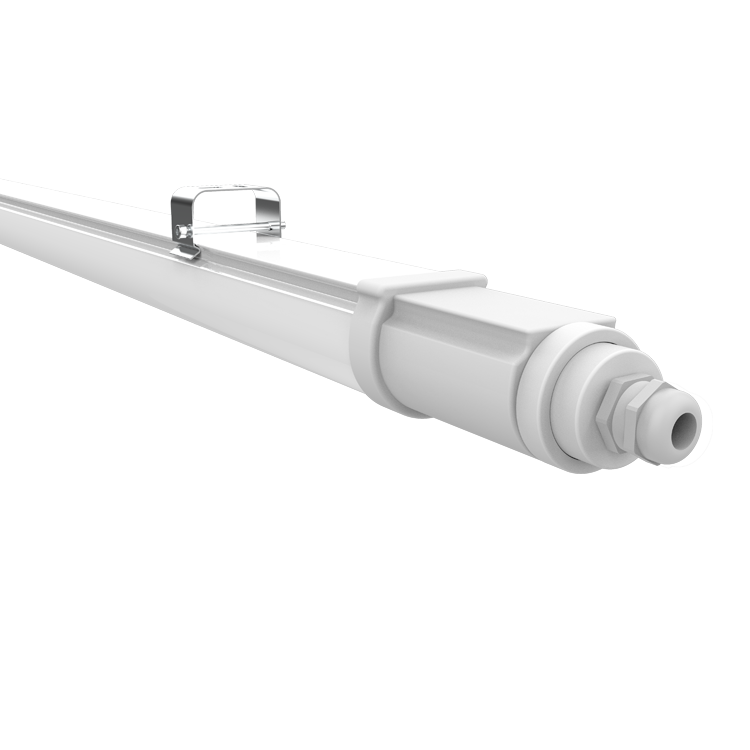
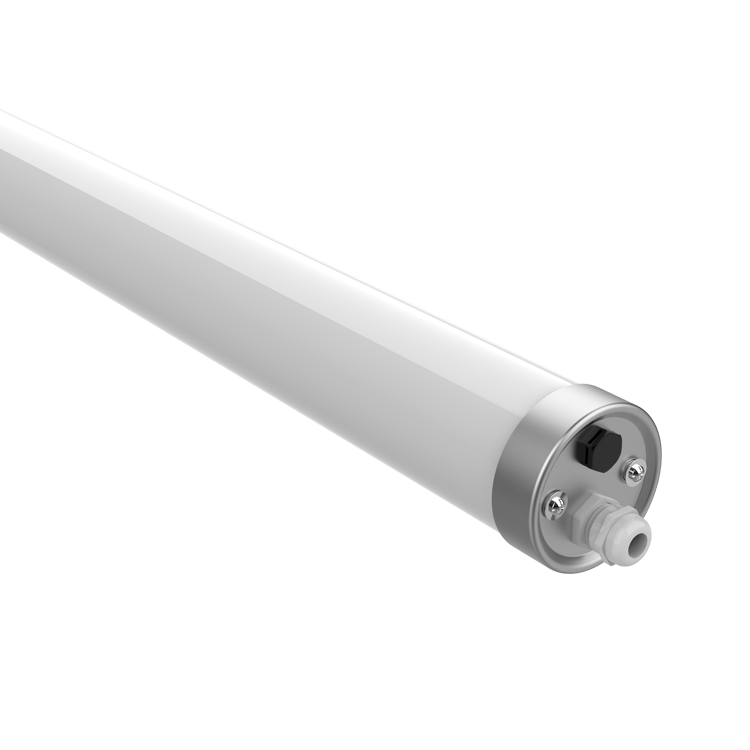
LED Tunnel Lights Tunnel sections High protection (IP65+), vibration-resistant design, corrosion-resistant
LED Emergency Lights All areas Switching time ≤ 0.5s, duration ≥ 90 min

4.3 LED Drivers

LED driver selection shall comply with the following requirements:

  • Shall use drivers that meet national standards

  • Shall satisfy EMC requirements (harmonics ≤ 10%)

  • Shall have over-voltage, over-current, and over-temperature protection

  • Dimmable drivers (0–10V/DALI) are recommended to support intelligent control

4.4 Special Area Luminaire Requirements

  • Lift/lower luminaires: High-ceiling spaces (e.g., depots) shall use lift/lower luminaires for easy maintenance

  • Anti-detachment luminaires: Special areas shall have anti-detachment measures

  • Tunnel luminaires: Shall use combined luminaire and mounting bracket assemblies; mounting brackets shall be constructed from stainless materials

5. Optical Design and Light Distribution

5.1 Distribution Requirements

Metro lighting shall employ appropriate distribution design:

  • Semi-cutoff distribution: Controls upward light output ratio to avoid direct glare

  • Tunnel lighting: Shall meet specific distribution type requirements to ensure clear driver visibility

  • Carriage lighting: Half-peak edge angle ≤ 60°

5.2 Transition Lighting Design

Metro stations are transition spaces from ground to underground, making illuminance gradient design critical:

  • Entry/exit passage illuminance controlled at 100–200 lx

  • Transitional lighting installed above escalators and passages at 1–2 meter intervals

  • Avoid sudden illuminance changes that cause light/dark adaptation issues

5.3 Unified Glare Rating (UGR) Control

UGR is an important metric for evaluating indoor lighting glare:

  • Use CCD imaging luminance meters for spatial glare analysis

  • Metro platform UGR ≤ 19, train carriage UGR ≤ 22

  • Select appropriate luminaire shielding angles and distribution curves

5.4 Optical Simulation

Metro lighting design should utilize professional optical simulation software (e.g., DIALux) for:

  • Illuminance distribution simulation

  • Uniformity verification

  • Glare assessment

  • Emergency lighting effect verification

6. Intelligent Lighting Control Systems

6.1 System Architecture

Metro intelligent lighting control systems typically employ a centralized management, zonal control architecture:

  • Central controller: Unified management and scheduling

  • Zone controllers: Zonal control by station hall, platform, passage, etc.

  • Terminal devices: LED luminaires + dimming drivers + sensors

6.2 Control Protocols

Protocol Features Metro Application
DALI Digital addressable, point-to-point control Mainstream choice
0–10V Analog dimming, lower cost Widely compatible
RS485 Wired communication, stable and reliable Tunnel sections
Wireless (ZigBee/Wi-Fi) Flexible deployment Retrofit projects

6.3 Control Strategies

Metro intelligent lighting systems can achieve the following control functions:

Control Strategy Description Energy Savings
Demand-based lighting Automatic dimming based on passenger flow and time of day Significant
Scene modes Preset modes: daily, peak, maintenance, holiday, etc. —
Time-scheduled control Different lighting effects at different times 20–35%
Occupancy sensing Automatic dimming based on passenger density 30–50%
Health monitoring Real-time luminaire status monitoring, fault alerts Reduced O&M costs

6.4 Emergency Lighting Control

Emergency lighting systems shall provide:

  • Switching time: ≤ 0.5s (EN 60598-2-22)

  • Duration: ≥ 90 min

  • Dual-power switching reliability: ≥ 5,000 cycles

7. Installation and Maintenance

7.1 Installation Requirements

Tunnel Luminaire Installation:

  • Luminaire installation in traffic areas shall satisfy safety requirements under maximum tunnel wind speed of 30 m/s

  • Shall use combined luminaire and mounting bracket assemblies; mounting brackets shall use stainless materials

General Installation Requirements:

  • Luminaires and lighting control devices shall be nationally certified

  • Shall be manufactured from Class B or higher flame-retardant materials

  • Photobiological safety shall comply with GB/T 20145

  • Outdoor and open areas at depots shall meet wind resistance requirements

Lift/Lower Luminaires: High-ceiling spaces shall use lift/lower luminaires for ground-level maintenance access

7.2 Maintenance Schedule

Recommended metro lighting maintenance:

Maintenance Item Frequency Notes
Luminaire cleaning Quarterly Remove dust, maintain light output
Hardware inspection Semi-annually Check anti-vibration and anti-detachment measures
Electrical inspection Annually Insulation, grounding, EMC performance
Comprehensive testing Annually Illuminance, uniformity, CCT verification

7.3 Operation and Maintenance Requirements

GB/T 16275-2025 Chapter 12 specifies detailed requirements for operation, maintenance, and measurement, including:

  • Periodic illuminance measurement

  • Luminaire cleaning and replacement

  • Emergency lighting periodic testing

  • Intelligent control system function verification

8. Quality Assurance and Testing

8.1 Core Testing Items

Metro LED luminaires shall pass the following tests:

Test Category Test Item Standard/Requirement
Optical performance Luminous flux, efficacy Platform ≥ 200 lm/W, Tunnel ≥ 150 lm/W
Distribution characteristics 3D intensity distribution Carriage half-peak edge angle ≤ 60°
Chromaticity CCT, CRI, SDCM CCT deviation ±150K, CRI station hall ≥80, SDCM≤5
Glare UGR Platform ≤ 19
Environmental adaptability Temperature cycling -40°C~+85°C, 100 cycles
Damp heat test 40°C/95%RH 1,000 hours
Salt spray test 5% NaCl solution 96 hours (coastal areas)
Vibration test 5–2000Hz, 5g 2 hours each axis
Impact test 30g/11ms 3 times each axis (X, Y, Z)
Ingress protection IP testing Tunnel IP65
Electrical safety Dielectric strength, insulation, leakage current Input-enclosure 3000VAC/1min
EMC Conducted/radiated emissions, harmonics CISPR15 Class B
Surge protection Power port surge Differential 4kV, Common 6kV
Durability Accelerated aging 7,000 hours (LM-80)
Switching cycles On/off testing ≥ 15,000 cycles

8.2 Key Certification Requirements

Certification/Test Applicable Market/Scenario Notes
CCC China Compulsory product certification
CQC China Quality certification
UL/ETL North America Electrical safety
CE/ENEC European Union Safety certification
GB/T 17743 China EMC testing
GB 17625.1 China Harmonic limits
RoHS Global Environmental compliance

8.3 Supplier Quality Evaluation Criteria

When selecting a metro LED lighting supplier, consider:

  • Complete EMC test compliance: Each model with corresponding complete test report

  • Complete documentation for approval: Meeting project acceptance requirements

  • Lead time: Small-scale retrofit projects require short lead times

  • Customization capability: Adaptation to project-specific requirements

  • Reliability track record: Products that pass complete testing procedures can achieve 62% lower failure rates compared to conventional approaches

Metro LED Lighting Project Checklist

Aspect Key Considerations
Applicable standards GB/T 16275-2025, GB 50157-2013, GB 50034-2013, DB44/T 1620-2015
EMC compliance GB/T 17743, GB 17625.1 Class C, harmonics ≤ 10%
Station hall illuminance 200–300 lx, UGR≤22, Ra≥80
Platform illuminance 150–200 lx, UGR≤25, Ra≥80
Tunnel illuminance ≥5 lx (normal), uniformity ≥0.7
Emergency lighting ≥50 lx, duration ≥60min, switching ≤5s
CCT 4000–5000K, deviation ±150K, SDCM≤5
CRI Public area Ra≥80, Tunnel Ra≥70
IP Rating Tunnel IP65, Entrance IP54
Vibration resistance ≥1.5G (standard) / 3.0G (high vibration)
Impact resistance IK10 (mandatory for tunnels)
Power factor ≥0.90 (≥0.95 preferred)
L70 lifetime ≥50,000 hours
Control protocol DALI / 0–10V
Dimming capability Demand-based lighting, scene modes, time-scheduled control
Luminaire materials Class B flame-retardant, corrosion-resistant (tunnels)
Certifications CCC, CQC (China); UL/ETL (North America); CE/ENEC (EU)
Test reports LM-80 lumen maintenance, complete EMC, IP/IK testing

This guide is intended for metro owners, design institutes, engineering contractors, facility managers, and lighting suppliers. For project-specific design recommendations, consult a professional lighting design firm or LED metro lighting manufacturer.

Entrance/Exit Areas:

Station Hall / Stairways / Escalators / Passages

Lighting at metro entrances and exits plays a critical role in ensuring passenger safety. Insufficient illuminance increases the risk of trips, falls, and other incidents — particularly in high-traffic transition zones.

To optimize visual comfort and safety, the illuminance balance between interior and exterior spaces should be dynamically adjusted based on time of day:

  • Daytime: 1:10 to 1:15 (exterior prioritized)

  • Nighttime: 2:1 to 4:1 (interior prioritized)

This adaptive lighting strategy minimizes the “black-hole effect” during daytime entry and the “white-hole effect” at night — maintaining optimal visual conditions and enhancing passenger safety throughout all operating hours.

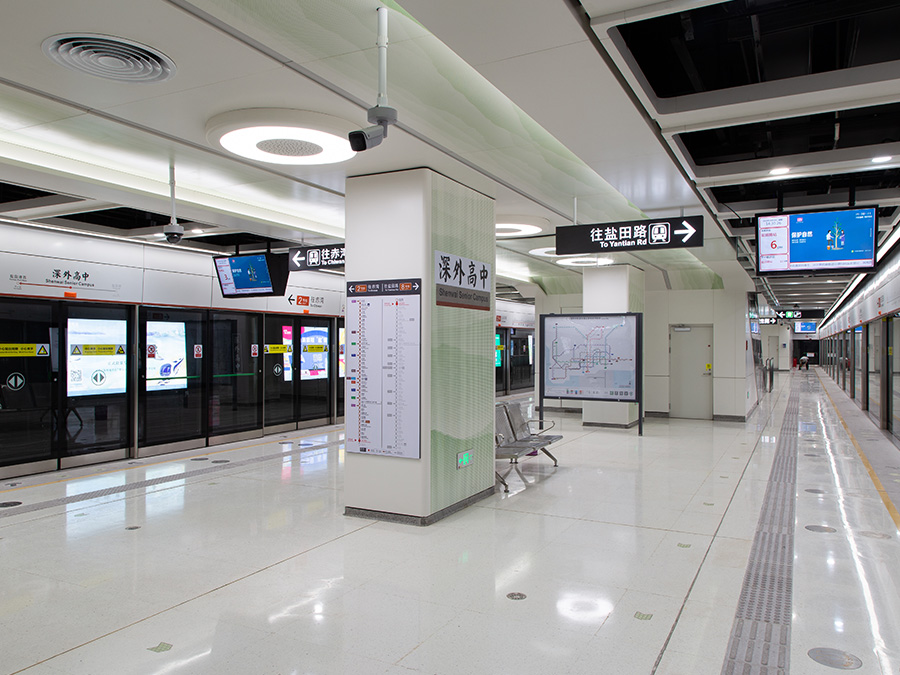
Station Hall:

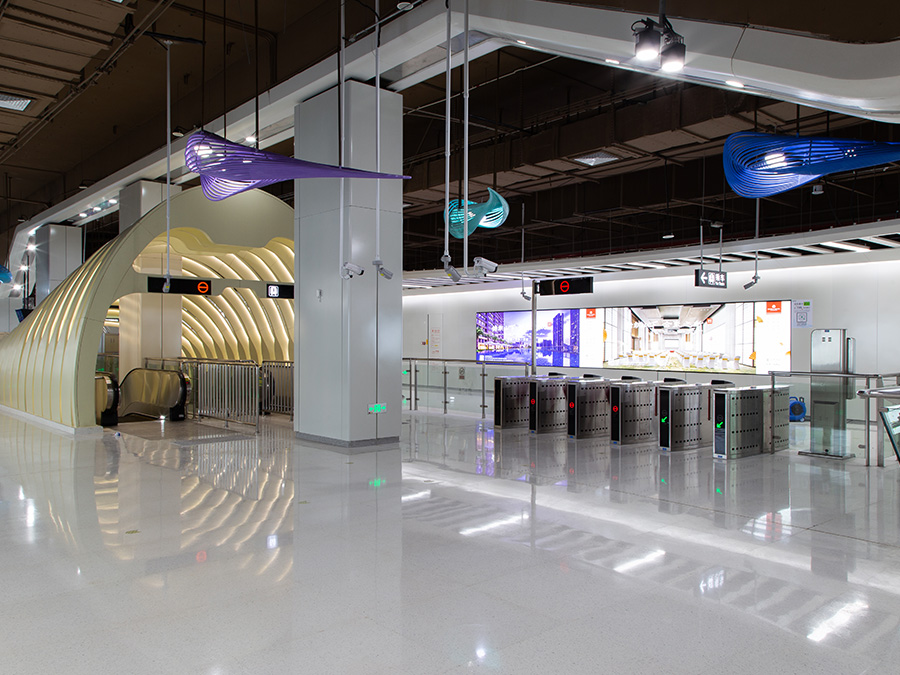
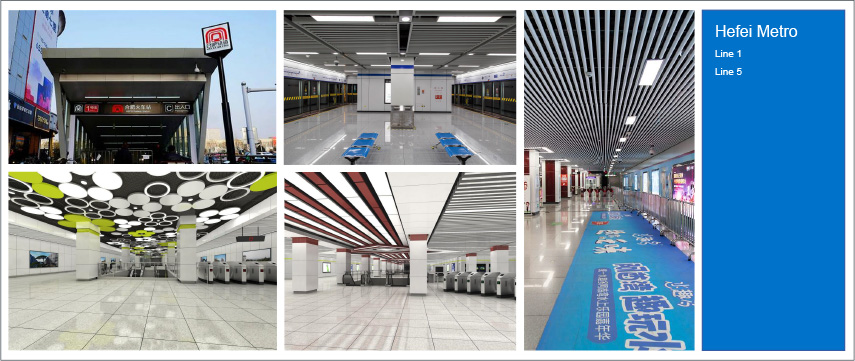
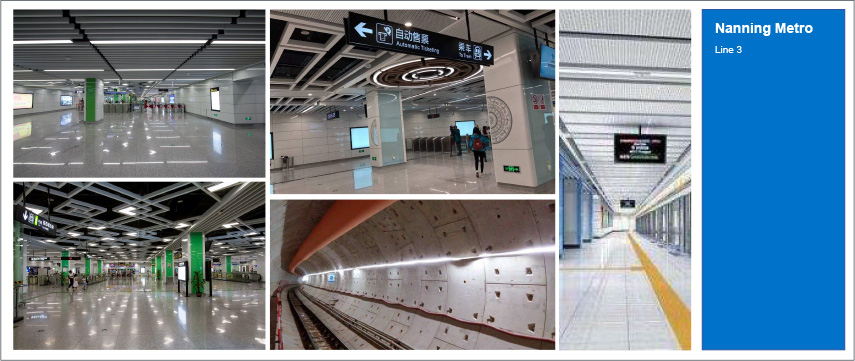
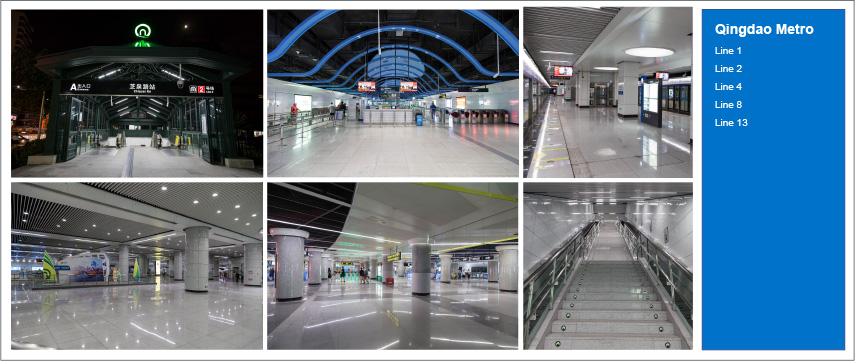
Stairs / Escalators / Ticket Office / Self-Service Ticket Vending Machines / Ticket Gates / Self-Service Gates / Underground Concourse

Passenger safety from station entry to boarding is the top priority, and lighting plays a key role throughout this journey. It must support safe walking, stair and escalator use, ticketing, security checks, gate navigation, and platform waiting — while also enabling passengers to read signs and information clearly.

Beyond basic illumination, well-designed lighting eases the visual transition from outdoor to indoor environments, enhances security, and helps ensure trains stop and depart safely and on schedule. A thoughtful lighting design thus improves both passenger experience and operational efficiency.

Platform:

Underground / Above Ground

As passengers move from the station hall to the platform, wait for trains, and board, clear visibility of the gap and height difference between the train and platform is essential for safety. Lighting must also ensure that screen doors are clearly visible to both passengers and drivers, supporting safe and punctual train arrivals and departures.

On the platform, lighting serves two purposes: it facilitates passenger movement and provides adequate illumination for reading signs or information while waiting. Direction signs above screen doors must be evenly lit and easy to read, while avoiding glare from both the signs and luminaires across the entire platform area.

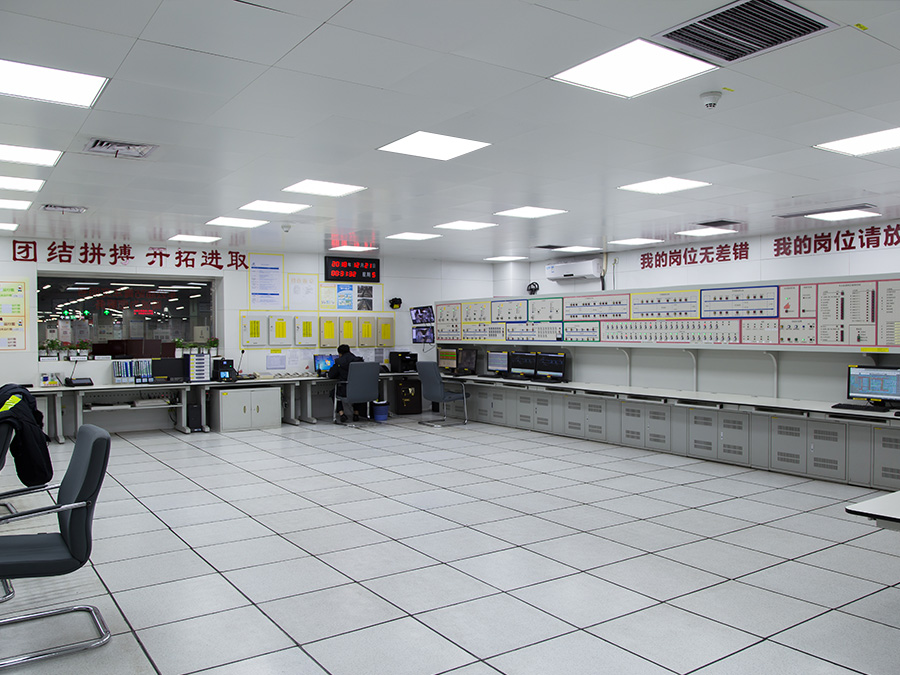
Equipment Area:

Office / Lounge / Bathroom / Comprehensive Control Room / Equipment Room / Pump Room / Fan Room / Air Duct / Computer Room / Central Control Room / File Room / Technical Equipment Room

Technical equipment rooms are essential facilities that support train operations and maintain a stable station environment. Their importance becomes particularly critical during emergencies, when they enable rapid response to accidents and disruptions. These spaces directly or indirectly support both train operations and passenger safety.

Lighting design in equipment areas must balance daily operational needs — convenience and energy efficiency — with emergency preparedness, ensuring the subway system operates reliably and securely under all conditions.

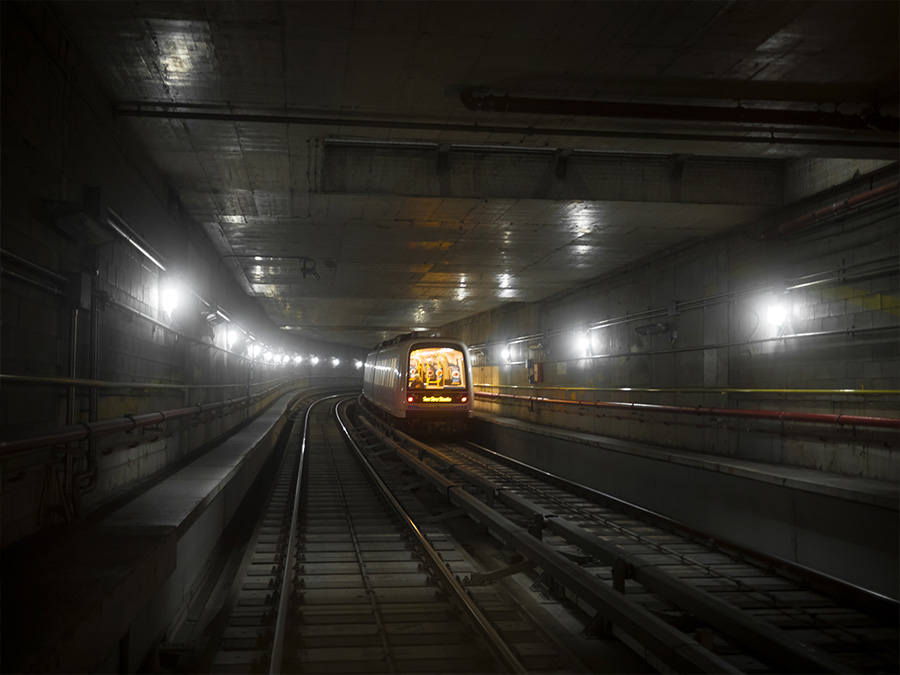
Interval Section:

Tunnel / Ground & Elevated Lines / Turnout Areas

The section between stations — known as the interval section — requires dedicated lighting comprising two types: working illumination and emergency lighting. Fixtures are typically installed at 5–6 meter intervals along the tunnel wall, with the two lighting types arranged alternately. In single-track tunnels, luminaires are generally mounted on the left wall in the direction of travel.

Interval lighting fixtures must meet rigorous performance requirements. They shall be waterproof, dustproof, and corrosion-resistant to withstand the demanding tunnel environment — including moisture, water ingress, and wind pressure generated by passing trains. A minimum ingress protection rating of IP65 is required to ensure stability and longevity under continuous vibration. Anti-glare optics are also essential to prevent disruption to train operators’ vision.

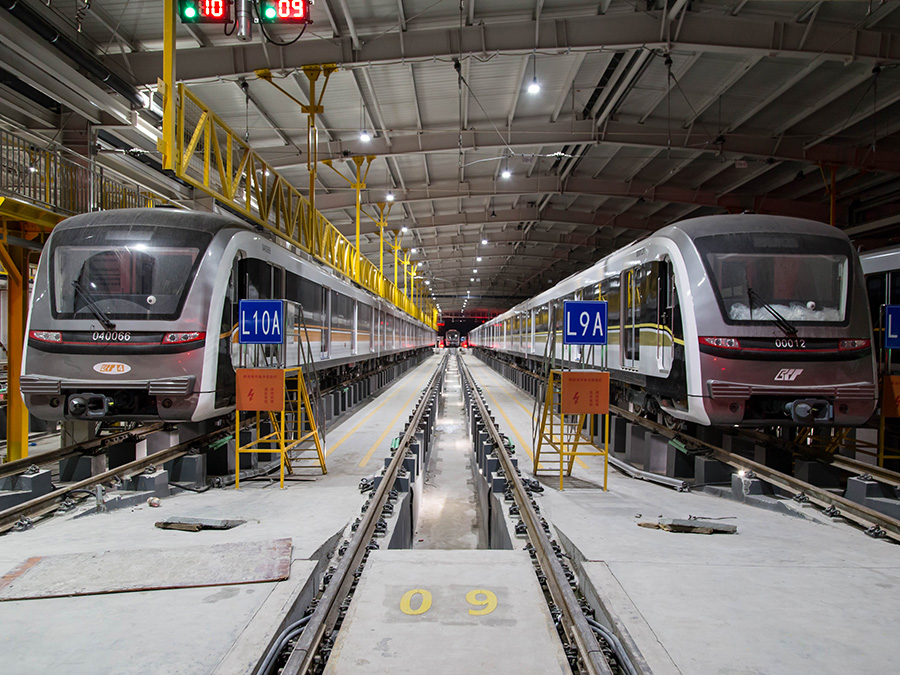
Depot:

Wash Bay / Signal Control Room / Inspection Room / Laboratory / Compressed Air Station / Warehouse / Intersection Roads

The depot is a critical facility for parking, managing, and maintaining subway vehicles — covering daily operations, routine upkeep, and scheduled maintenance. Lighting design typically comprises three components: high-mast/street lighting, ceiling-mounted luminaires, and under-platform lighting.

Luminaires must be waterproof, dustproof, and lightning-protected to ensure safety and reliability, with a minimum IP65 rating. Under-platform lighting shall operate at low voltage (24V or 36V) for enhanced safety.

This design approach ensures adequate illumination, safety, and reliability — creating an optimal working environment for vehicle management and maintenance.

Our Advantage

With a seasoned R&D team and extensive real-world application experience, MasonLED holds a distinct edge in delivering tailored lighting solutions to a global customer base. Our capabilities span both industrial and commercial sectors, as well as general and intelligent lighting applications.

We have successfully executed customized LED lighting projects for diverse applications, including:

  • Transit & Infrastructure – Metro and roadway lighting

  • Retail & Display – Advertising signage and refrigerator/freezer lighting

  • Food & Agriculture – Specialty lighting for meat and produce displays

  • Warehousing & Logistics – High-bay and industrial storage lighting

These projects have been deployed across Australia, Germany, France, the United States, and other key markets, demonstrating our ability to meet varied regional standards and performance requirements.

ODM/OEM Capabilities

Our comprehensive manufacturing infrastructure and engineering expertise position us as a reliable partner for both ODM (Original Design Manufacturing) and OEM (Original Equipment Manufacturing) projects. We excel in:

  • Concept-to-production – From initial design and prototyping to mass production and delivery

  • Full customization – Optical, mechanical, electrical, and thermal design tailored to your specifications

  • IP protection – Strict confidentiality agreements to safeguard your proprietary designs

  • Flexible scaling – Pilot runs to container-load orders with consistent quality assurance

Whether you require a standard product modification or a completely new design, MasonLED provides the technical depth and operational capacity to bring your vision to market.

R&D & Innovation

The company’s R&D department has years of experience in LED lighting product development and is proficient in the operation processes of various ODM/OEM projects. It can efficiently meet customized customer requirements, ensuring an optimal balance between product performance, cost, and delivery time.

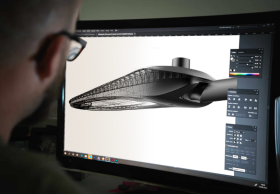
ID design

ID design

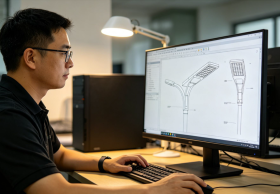
Mechanical engineering

Mechanical engineering​

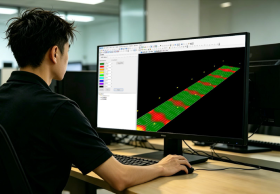
Optical engineering

Optical engineering

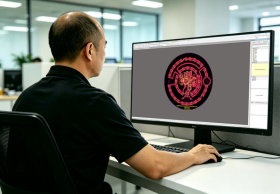
Electronic engineering

Electronic engineering

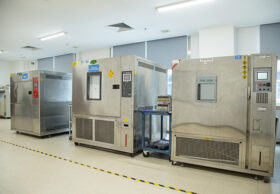
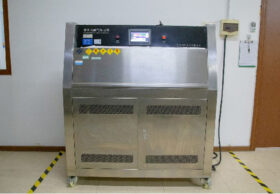
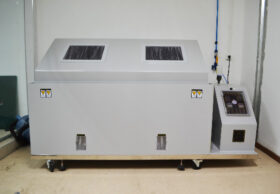
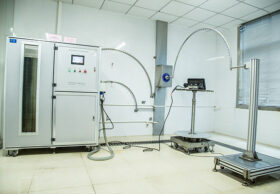
Laboratory

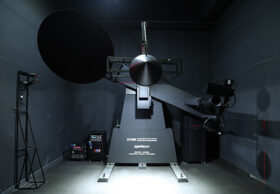
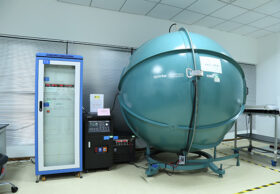
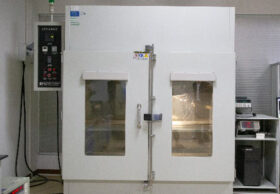
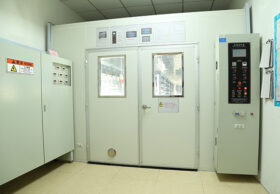
We embed quality at every stage of production — from initial design and material sourcing to manufacturing and final testing. Strict in-process inspections, 72‑hour aging, and photometric verification in our CNAS‑accredited lab ensure that every luminaire delivers consistent performance, reliability, and safety — order after order.

Full-Space Distribution Photometer

Environmental Reliability Testing

Integrating Sphere Test System

Integrating Sphere Test System

Natural Convection Heating Chamber

Natural Convection Heating Chamber

High-Temperature Aging Room

High-Temperature Aging Room

Environmental Reliability Testing

Environmental Reliability Testing

UV Testing Machine

UV Testing Machine

Salt Spray Test Chamber

Salt Spray Test Chamber

IP waterproof test

IP waterproof test

Manufacturing Strength

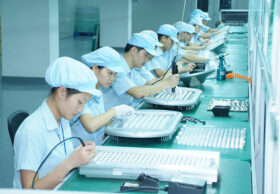
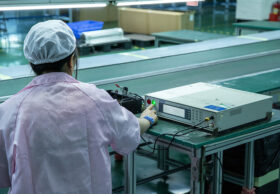
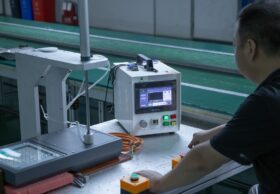
Our production process is built on rigorous quality controls at every stage – from incoming material inspection (IQC) to final testing. Each luminaire must pass 100% air‑tightness testing, 100% hi‑pot (dielectric strength) testing, and 100% burn‑in aging testing, ensuring zero defects in sealing integrity, electrical safety, and long‑term reliability. With these stringent measures, we guarantee flawless performance in every shipment.

production line

Manufacturing Line

100% High Voltage Withstand Test

100% High Voltage Withstand Test

100% Air Tightness Test

100% Air Tightness Test

100% Product Aging

100% Product Aging

Smart warehouse management

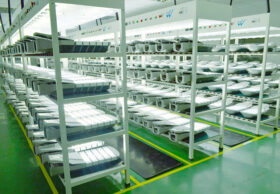
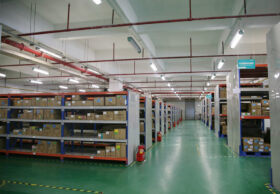
With a 5,000㎡ warehousing center at our core, we maintain exceptional material coordination and production flexibility — empowering us to tackle large‑scale municipal projects, adapt to urgent customer demands, and deliver consistent mass production without compromise.

Warehousing center

Warehousing center

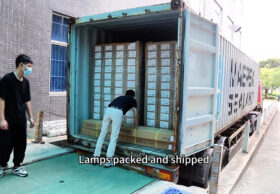
Product Shipping

Product Shipping

Related Articles

How can we help you?

Get in Touch