
LED phosphor is one of the most essential functional materials in modern solid-state lighting technology. It serves as a wavelength conversion medium that transforms monochromatic light emitted by LED chips into full-spectrum visible light, enabling the production of high-quality white LED illumination.
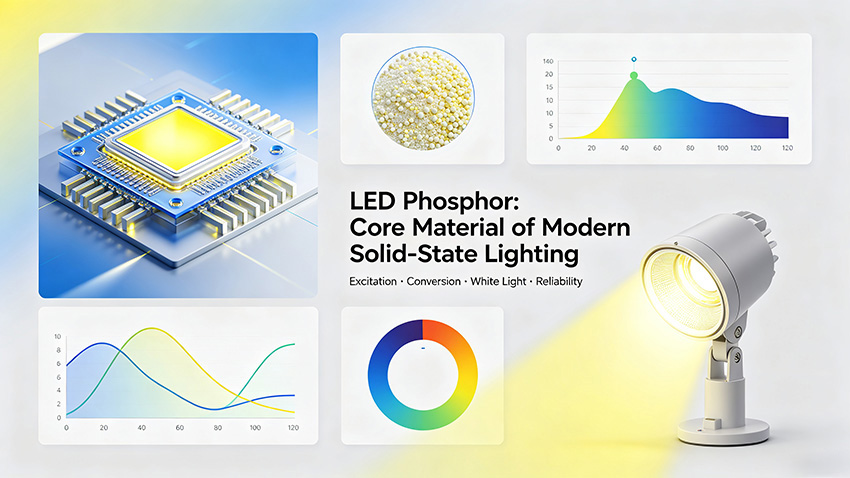
The most common working principle applies blue LED chips combined with yellow phosphor coating. Part of the blue light is absorbed and converted into yellow light, while the remaining blue light mixes evenly with converted yellow light to form stable white light output. For higher color rendering performance, red and green phosphors are also added to optimize the light spectrum, improving color fidelity and visual comfort.
Phosphor materials determine key lighting parameters, including color temperature, color rendering index, luminous efficiency and thermal stability. High-grade LED phosphors feature low light decay, excellent heat resistance and stable chemical properties. They can maintain consistent luminous performance under long-term high-temperature operation, which is critical for outdoor street lights, commercial panel lights and industrial lighting fixtures.
With the continuous upgrading of lighting standards, modern phosphor technology focuses on full-spectrum illumination, low blue light protection and energy saving advantages. Advanced nitride and silicate phosphor formulas effectively reduce harmful blue light and achieve natural sunlight-like lighting effects.
As the core guarantee of LED light quality, phosphor materials directly affect product competitiveness, service life and market qualification. It remains an indispensable core component for high-efficiency, long-lifespan and high-reliability LED lighting products.