
Wanneer bewoners om betere straatverlichting vragen, vragen ze zelden om meer schittering, feller licht of helderdere slaapkamerramen. Ze vragen om helder te zien, zich veilig te voelen en donkere plekken te elimineren waar incidenten zich verbergen. Moderne LED-straatverlichting levert, wanneer correct gespecificeerd en geïnstalleerd, precies dat – terwijl ze de veelvoorkomende valkuilen van oudere technologieën vermijden.
- Hogere kleurrenderingsindex (CRI) – De echte wereld zien
Traditionele straatlantaarns met hogedruknatrium geven die bekende geel-oranje gloed uit. Ze hebben een Color Rendering Index (CRI) van slechts 20–25 op een schaal van 0 tot 100. 's Nachts onder HPS-verlichting ziet een rode auto er bruin uit, een blauwe jas grijs, en wordt iemands gezicht bijna onherkenbaar op korte afstand.
LED-straatlantaarns bereiken doorgaans een CRI van 65–80, waarbij premium modellen 90+ bereiken. Dit maakt een diepgaand verschil in de veiligheid in de echte wereld. Politieagenten kunnen de kledingkleur van een verdachte nauwkeurig beschrijven. Bestuurders kunnen een voetganger onderscheiden van een straatnaambord, of een fietser van een schaduw. Huiseigenaren kunnen een bezoeker herkennen die hun voordeur nadert. In beveiligingsbeelden levert hogere CRI-verlichting veel bruikbaarder bewijs op.
2. Uniforme verlichting – Eliminatie van gevaarlijke schaduwen
Oudere straatlantaarnontwerpen – vooral cobra-koparmaturen met refractorlenzen – creëren felle lichtpoelen direct onder elke paal, omringd door diepe, donkere schaduwen. Precies in die schaduwen vinden criminele activiteiten en ongelukken plaats. Iemand die van licht naar schaduw naar licht loopt, ondervindt constante aanpassingsspanning, waardoor het moeilijker wordt obstakels te zien.
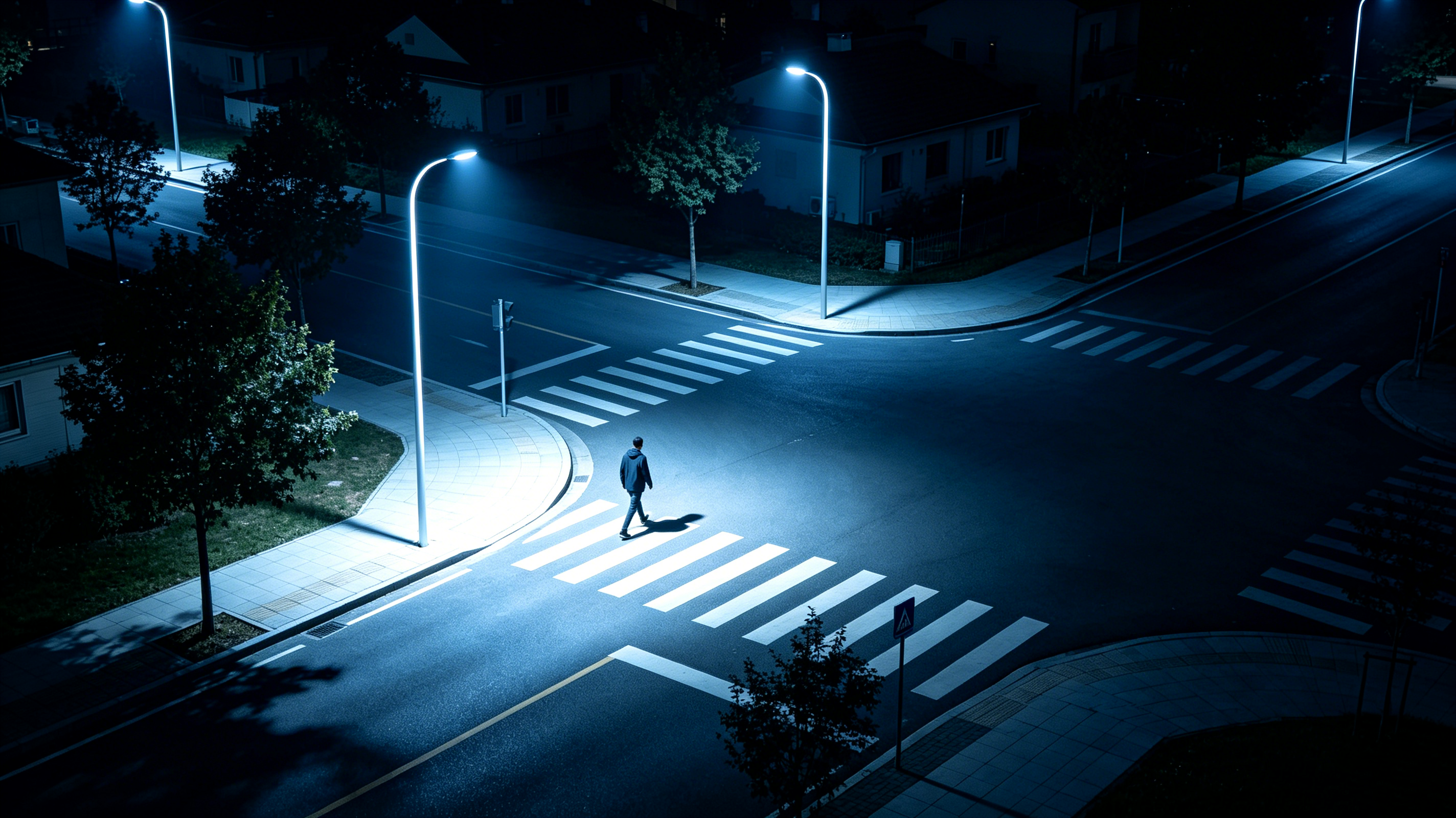
Moderne LED-optiek stelt ingenieurs in staat om Type II, III, IV en V verdelingen te ontwerpen die licht gelijkmatig verdelen over wegen, trottoirs en fietspaden. Het resultaat zijn uniformiteitsverhoudingen (gemiddelde tot minimale verlichting) die voldoen aan of de IES-normen overtreffen. Het Chicago Alley Lighting Project, dat donkere, met schaduwen gevulde steegjes verving door uniforme LED-verlichting, documenteerde een daling van 39% in nachtelijke criminaliteit in de doelgebieden. Andere studies hebben aangetoond dat uniforme verlichting botsingen tussen voetgangers en voertuigen met 15–25% op kruispunten kan verminderen.
3. Vermindering van schittering – licht waar je het nodig hebt, niet waar je het niet nodig hebt
Vroege LED-straatlantaarns veroorzaakten vaak een harde, onaangename schittering omdat ze onbeschermde, hoogintensieve puntbronnen gebruikten. Tegenwoordig heeft de industrie van die fouten geleerd. Kwaliteits-LED-armaturen zijn onder andere:
– Volledige afsnijbeveiliging – richt 100% van het licht naar beneden onder het horizontale vlak
– Diffuuslenzen – lichtverdeling gelijkmatig van meerdere kleine emitters in plaats van één intens punt
– Precisieoptiek – beheerst de bundelverspreiding om te voorkomen dat licht in ramen of de ogen van de bestuurder wordt gericht
De Illuminating Engineering Society (IES) biedt nu lampclassificaties (Backlight, Uplight, Glare – BUG-classificaties) voor gecertificeerde straatverlichting. Het specificeren van armaturen met lage glans zorgt ervoor dat het zicht niet ten koste gaat van ongemak of gevaarlijke verblindingseffecten voor bestuurders.
4. Zelfvertrouwen van bestuurders en voetgangers – De psychologische impact
Veiligheid draait niet alleen om daadwerkelijke misdaadcijfers of aanrijdingscijfers. Het gaat ook over perceptie. Als bewoners zich onveilig voelen, vermijden ze 's nachts wandelen, fietsen of openbare ruimtes te gebruiken – wat de gemeenschapsactiviteit vermindert en de isolatie vergroot.
Onderzoeken van grootschalige LED-retrofitprojecten vertellen een consistent verhaal. In Los Angeles gaf meer dan 80% van de bewoners, nadat ze 140.000 straatlantaarns hadden omgebouwd naar LED's, aan zich 's nachts veiliger te voelen tijdens het lopen. In New York City bleek uit soortgelijke enquêtes dat voetgangers verbeteringen merkten in gezichtsherkenning, obstakeldetectie en algemene zichtbaarheid. Voor bestuurders verbetert goed ontworpen LED-verlichting het perifere zicht en verkort het de reactietijd op onverwachte obstakels – wat leidt tot een geschatte vermindering van 10–20% in de botsingspercentages 's nachts op goed verlichte wegen.
Belangrijke veiligheidstip (tegenstrijdig maar cruciaal): Overbelichting kan net zo gevaarlijk zijn als onderverlichting. Overmatige helderheid veroorzaakt aanpassingsproblemen voor donker, verhoogt schittering en kan de veiligheid juist verminderen. Het is essentieel om de door IES aanbevolen verlichtingsniveaus te volgen – niet hoger dan te schrijden. Meer licht is niet altijd veiliger licht.
Conclusie: Wanneer LED-straatlantaarns worden geïnstalleerd met de juiste kleurtemperaturen (3000K–4000K), volledige afscherming en door IES aanbevolen lichtniveaus, maken ze steden meetbaar veiliger voor bestuurders, voetgangers en politie – zonder overlastig licht te creëren voor bewoners.