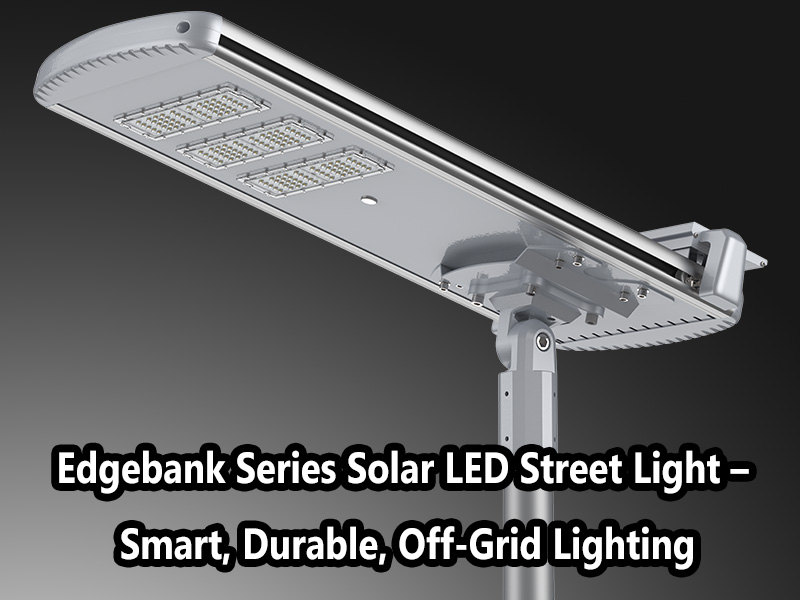

Two-Temperature LED Streetlights: Balancing Safety and Ecology
As cities transition to energy-efficient LED lighting, a new innovation—dual-color temperature (CCT-tunable) LED streetlights—promises to reduce ecological disruption while maintaining public safety. Unlike traditional LEDs with fixed cool-white light (5000K), these systems adjust from warm (3000K) to cool (4000K) based on real-time needs. Here’s how they impact the environment.
- Less Light Pollution, Better Night Skies
Cool-white LEDs scatter more blue-rich light, contributing to skyglow that disrupts wildlife migration and astronomical observations. Warm-temperature modes reduce blue wavelengths by ~60%, minimizing skyglow without compromising ground visibility. Cities near protected habitats or observatories are adopting this feature.
- Protecting Nocturnal Wildlife
Insects, bats, and migratory birds are highly sensitive to blue light. Studies show warm LEDs attract 40–50% fewer insects than cool LEDs, reducing predation pressure on bat foraging zones and lowering bird collisions during migration. Tuning lights to warm tones after midnight creates “dark corridors” for sensitive species.
- Plant and Ecosystem Health
Prolonged exposure to blue-rich light can alter plant flowering cycles and suppress melatonin production in animals. Dual-color systems mimic natural moonlight shifts when set to warm modes (3000K) during late-night hours, preserving circadian rhythms of trees, pollinators, and soil microbes.
- Energy Efficiency Without Compromise
Warm LEDs are slightly less efficient than cool ones (≈5–10% lower lumens/watt), but adaptive systems use sensors to switch to cool-white only during high-traffic hours (e.g., 10 PM–12 AM). This hybrid approach saves 20–30% energy compared to fixed cool LEDs while reducing ecological harm.
- Human Health Benefits
Cool-white LEDs suppress human melatonin more than warm lights, potentially affecting sleep. Adaptive dimming to warm tones after midnight in residential areas supports residents’ circadian health—a win-win for people and wildlife.
Challenges & Solutions
– Cost: Smart controls add 15–20% upfront cost, but energy savings repay it within 3–5 years.
– Over-illumination: Proper shielding and motion sensors prevent unnecessary light spill.
– Standardization: The International Dark-Sky Association now certifies tunable LEDs as “eco-friendly” if they achieve <3000K during 11 PM–5 AM.
Dual-color LED streetlights are not a silver bullet—but they represent a major step toward reconciling urban safety with ecological integrity. When deployed with dimming schedules and shielded fixtures, they cut light pollution by up to 50% while reducing insect mortality and protecting plant cycles. As cities from Flagstaff to Tokyo pilot these systems, the evidence is clear: smart lighting means both safer streets and darker skies.
For municipalities: Prioritize warm-default (3000K) tuning with motion-activated cool-white only where needed. Nature will thank you.