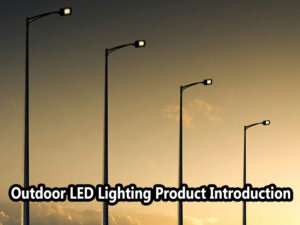
Outdoor LED Lighting Product Introduction
Outdoor LED Lighting Product Introduction Guangdong Mason Technologies Co., Ltd. is a powerful ODM/OEM manufacturer of industrial and outdoor LED lighting products. Backed by listed
Commercial LED street lights from a professional manufacturer. Ideal for roads, parking lots, and public areas, our durable and efficient lights feature smart dimming capabilities, simplified installation, and are built to international standards.
MasonLED delivers tailored lighting solutions for streets, warehouses, factories, parking lots, and cold storage. With custom ODM/OEM support, we optimize optics, thermal management, and IP ratings to match your project needs – backed by 16+ years of expertise and a CNAS‑accredited lab.

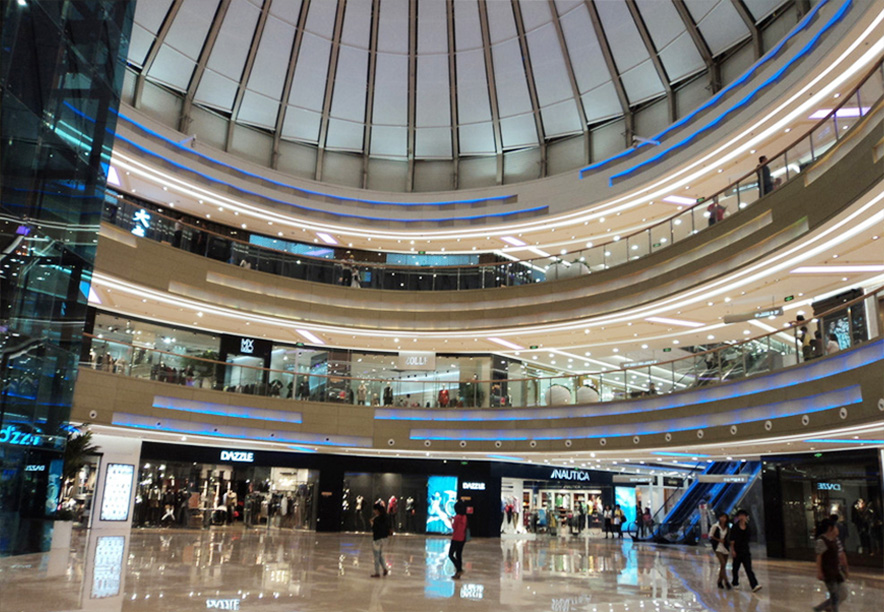
Commercial lighting encompasses a diverse range of environments—retail stores, office buildings, hotels, restaurants, supermarkets, educational facilities, and healthcare institutions—each with unique illumination requirements. Unlike industrial or residential applications, commercial lighting must balance visual comfort, merchandise presentation, brand identity, energy efficiency, and regulatory compliance.
LED technology has fundamentally transformed the commercial lighting landscape. Today, linear fluorescent fixtures and LED solutions dominate approximately 95% of installed commercial lighting. LEDs offer superior efficacy (130–180+ lm/W), lifespans extending to 50,000 hours, and unprecedented controllability—enabling lighting designs that were impossible with conventional technologies.
This guide provides a comprehensive technical reference for specifiers, facility managers, and procurement professionals—covering industry standards, performance parameters, product selection criteria, illuminance recommendations, optical design principles, intelligent controls, and quality assurance frameworks for LED commercial lighting applications.
The Illuminating Engineering Society (IES) has established a comprehensive suite of standards that govern commercial lighting design and LED performance measurement:
IES LM-79 – Approved Method for Electrical and Photometric Measurement of Solid-State Lighting Products. This standard defines the testing environment, procedures, and parameters for measuring total luminous flux, electrical power, luminous efficacy, intensity distribution, and chromaticity characteristics of LED luminaires. LM-79 testing is mandatory for DLC, ENERGY STAR, and virtually all major certification programs.
IES LM-80 – Approved Method for Measuring Lumen Maintenance of LED Light Sources. This standard requires LED packages, modules, and arrays to be tested at multiple case temperatures over a minimum of 6,000 hours (10,000 hours recommended) to measure lumen depreciation over time.
IES TM-21 – Projecting Long-Term Lumen Maintenance of LED Light Sources. This standard uses LM-80 test data to extrapolate L70 (time to 70% lumen maintenance) and L50 lifetimes, providing the basis for warranty claims and lifecycle cost calculations.
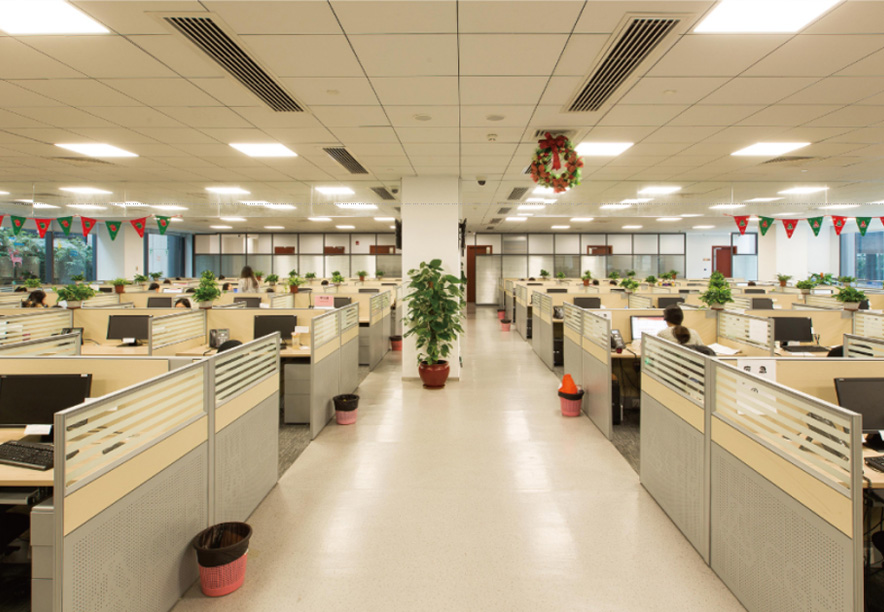
ANSI/IES RP-1-22 – Recommended Practice: Lighting Office Spaces. This is the definitive reference for office lighting design, covering illuminance recommendations, glare control, daylight integration, and energy efficiency strategies for open-plan offices, private offices, and conference rooms.
ANSI/IES RP-2-20 – Recommended Practice: Lighting Retail Space. This standard provides criteria essential to lighting merchandise displays in a variety of retail applications. It specifies that the lighting system should be designed to create a pleasant and secure environment for conducting business. Research cited in the standard shows that effective retail lighting can enhance sales by up to 40%, with one retailer achieving a 12% sales increase after installing LED retail lighting.
ANSI/IES RP-3-26 – Recommended Practice: Lighting Educational Facilities, covering learning and study activities and associated circulation areas.
ANSI/IES LP-6-25 – Lighting Practice: Lighting Control Systems – Properties, Selection, and Specification. Approved in 2025 as an American National Standard, this document provides comprehensive guidance on lighting control system selection and specification. It categorizes control systems into three types: standalone control, room/zone control, and networked control. The standard notes that networked lighting is expected to account for over 45% of commercial building lighting energy savings potential by 2035.
The DLC maintains the largest and most influential list of high-performing LED luminaires and commercial lighting products globally. Since the program began in 2011, the average efficacy of qualified LED products has increased by 70%.
SSL Technical Requirements V5.1 is the currently active DLC Technical Requirements for commercial and industrial LED lighting products. V5.1 contains quality of light requirements, including spectral quality and glare, and new controllability requirements.
SSL Version 6.0 was published on November 3, 2025, and becomes effective January 5, 2026. V6.0 introduces a combined set of technical requirements and policies, improving efficacy, quality, and controllability of DLC-listed products.
Key DLC requirements for commercial lighting products:
Efficacy: Minimum requirements vary by category, with Premium qualification typically requiring 15+ lm/W above Standard
Color quality: CRI reporting and TM-30 requirements, including R9 and Rcs,h1 reporting (red rendering index)
Spectral Power Distribution (SPD): Must be submitted for V5.1 compliance
Controllability: Virtually all indoor luminaires and retrofit kits must be dimmable
Glare control: UGR thresholds apply to certain product categories
ENERGY STAR provides efficiency requirements for commercial LED luminaires. Commercial linear ambient luminaires must achieve ≥375 lumens per foot with ≥131 lm/W efficacy. Commercial LED products must be listed on the ENERGY STAR Qualified Commercial Lighting List to qualify for federal procurement mandates.
| Certification | Scope | Key Markets |
|---|---|---|
| UL / ETL | Electrical safety, component and luminaire-level testing | North America |
| CE | Health, safety, and environmental protection standards | European Union |
| ENEC | European Norms Electrical Certification (higher rigor than CE) | Europe |
| SAA | Electrical safety for lighting equipment | Australia |
| CCC / CQC | China Compulsory Certification / Quality Certification | China |
Commercial lighting projects must also comply with building energy codes:
ASHRAE/IES 90.1 – Energy Standard for Buildings (US)
IECC – International Energy Conservation Code
California Title 24 – Stringent lighting control requirements
| Performance Tier | Efficacy Range | Application Suitability |
|---|---|---|
| Standard commercial | 110–130 lm/W | General office, retail, hospitality |
| High-performance | 130–150 lm/W | Premium commercial, DLC listed |
| Premium | 150–170+ lm/W | DLC Premium, ENERGY STAR qualified |
Modern commercial LED products achieve ≥160 lm/W for high-performance applications. According to FEMP guidelines, commercial linear ambient luminaires must achieve ≥131 lm/W.
| CCT | Color Appearance | Recommended Commercial Application |
|---|---|---|
| 2700K | Warm white | Restaurants, hotels, hospitality, decorative settings |
| 3000K | Warm white | Retail (apparel, jewelry), hospitality, residential-style offices |
| 3500K | Neutral warm | General retail, showrooms |
| 4000K | Neutral white | Offices, supermarkets, schools, hospitals, general commercial |
| 5000K | Cool white | Task lighting, display cases (use with caution—can appear harsh) |
Selection guidance: Commercial office environments should use 4000K as the standard CCT. Retail spaces can vary from 3000K–4000K depending on brand identity and merchandise type. Hospitality and dining venues typically favor 2700K–3000K warm white with dimming capability.
CRI measures how accurately a light source renders colors compared to natural light.
| CRI Value | Application Suitability |
|---|---|
| CRI ≥ 80 | General commercial (offices, schools, warehouses) |
| CRI ≥ 90 | Retail (especially apparel, jewelry, fresh food), art galleries, high-end restaurants |
| CRI ≥ 90 with R9 > 0 | Premium retail, museum, medical, color-critical applications |
Industry standard: Indoor commercial lighting requires CRI ≥ 80. For retail spaces, Ra > 90 is recommended. Special consideration should be given to R9 (red rendering), as R9 values near or above 0 typically ensure Ra stays above 80. DLC V5.1 requires reporting of both CRI and TM-30, including R9 and Rcs,h1 values.
UGR predicts the amount of discomfort-causing glare produced by a lighting installation.
| UGR Value | Application Suitability |
|---|---|
| UGR < 16 | Premium visual environments (art galleries, high-end retail) |
| UGR < 19 | Retail spaces, general commercial |
| UGR < 22 | General office, acceptable for most commercial applications |
| UGR ≥ 25 | Industrial, utility spaces (not suitable for commercial occupied spaces) |
Selection guidance: Retail spaces should target UGR < 19. Office environments with computer workstations benefit from lower UGR values to reduce eye strain and fatigue.
Minimum acceptable: PF ≥ 0.85
Good practice: PF ≥ 0.90
High-quality: PF ≥ 0.95
Low power factor results in reduced electrical system capacity and may incur utility penalties in commercial buildings.
Color consistency ensures that multiple luminaires in the same space appear visually identical. For commercial applications:
Standard: ≤ 7 SDCM (MacAdam steps)
Premium: ≤ 5 SDCM
Color-critical applications: ≤ 3 SDCM
Poor color consistency creates a visually distracting environment—particularly problematic in retail displays and open-plan offices.
L70 is the time (in hours) at which a luminaire’s light output declines to 70% of initial output. For commercial LED luminaires:
Minimum acceptable: L70 ≥ 35,000 hours
Good practice: L70 ≥ 50,000 hours
Premium: L70 ≥ 100,000 hours
Definition: Rectangular luminaires designed to fit into standard suspended ceiling grids (typically 2’×2′ or 2’×4′).
Typical Applications:
Open-plan offices
Private offices
Conference rooms
Educational facilities
Healthcare facilities
Form Factors:
2’×2′ troffer – Common in small offices, corridors
2’×4′ troffer – Standard for open-plan commercial spaces
1’×4′ troffer – Narrower profile for architectural applications
Lens Options: Prismatic, diffused, micro-prismatic, or linear batwing for specific distribution requirements.
Definition: Long, narrow luminaires that can be suspended, surface-mounted, or recessed.
Typical Applications:
Open-plan offices (suspended)
Retail aisles
Supermarkets
Educational facilities
Industrial/commercial hybrid spaces
Key Advantages: Clean aesthetic, excellent uniformity, and easy integration with daylighting strategies.
Definition: Recessed luminaires that direct light downward, typically round or square in appearance.
Typical Applications:
Corridors and lobbies
Office areas
Retail environments (general ambient lighting)
Hospitality (hotel rooms, restaurants)
Beam Angle Options:
Narrow (15°–30°) – Accent lighting, feature illumination
Medium (40°–60°) – General task lighting
Wide (60°–90°) – Ambient lighting, large spaces
Definition: Adjustable luminaires mounted on a track system, allowing flexible positioning and aiming.
Typical Applications:
Retail merchandise highlighting
Art galleries and museums
Dynamic display areas where merchandise changes frequently
Showrooms and trade exhibits
Key Advantage: High flexibility—luminaire positions and angles can be adjusted as displays change.
Definition: Thin, flush-mounted luminaires that provide uniform, glare-free illumination across a large surface area.
Typical Applications:
Hotel lobbies
Office ceilings
Conference rooms
Retail environments requiring low-glare ambient lighting
Key Advantages: Ultra-thin profile, low glare, large-area uniform illumination.
Definition: Luminaires designed for commercial spaces with high ceilings (high-bay: >6m; low-bay: <6m).
Typical Commercial Applications:
Big-box retail stores
Warehouse clubs (Costco, Sam’s Club)
Exhibition halls
Gymnasiums and sports facilities
Large atriums
Key Considerations: High-bay commercial applications require careful optical design to deliver uniform illumination at the merchandise or work plane.
Typical Applications:
All commercial buildings (code requirement)
Egress paths and stairwells
Exit doorways
Key Requirements: Battery backup duration, testing frequency, and illuminance levels as defined by local building and fire codes.
The following tables provide IES recommended maintained illuminance targets for commercial spaces. Values are measured at the task plane (typically 0.76m above floor for office work, merchandise surfaces for retail).
Office Spaces:
| Space Type | Recommended Illuminance (fc) | Recommended Illuminance (lux) | Special Considerations |
|---|---|---|---|
| Private offices | 30–50 fc | 300–500 lux | Target 40 fc average |
| Open-plan offices (computer work) | 30–50 fc | 300–500 lux | Reduce glare on screens |
| Conference rooms | 30–50 fc | 300–500 lux | Dimming capability for presentations |
| Corridors / lobbies | 10–20 fc | 100–200 lux | Architectural accent desirable |
| Break rooms / cafeterias | 20–30 fc | 200–300 lux | Warm CCT recommended |
Office spaces benefit from uniform lighting levels between 30 and 50 foot-candles, making reading, writing, and screen work easier.
Retail Spaces:
| Space Type | Recommended Illuminance (fc) | Recommended Illuminance (lux) | Special Considerations |
|---|---|---|---|
| General merchandise | 30–50 fc | 300–500 lux | Even ambient coverage |
| High-end retail / boutiques | 50–100 fc | 500–1000 lux | Accent lighting for displays |
| Jewelry / fine detail | 100+ fc | 1000+ lux | High CRI (90+), low glare |
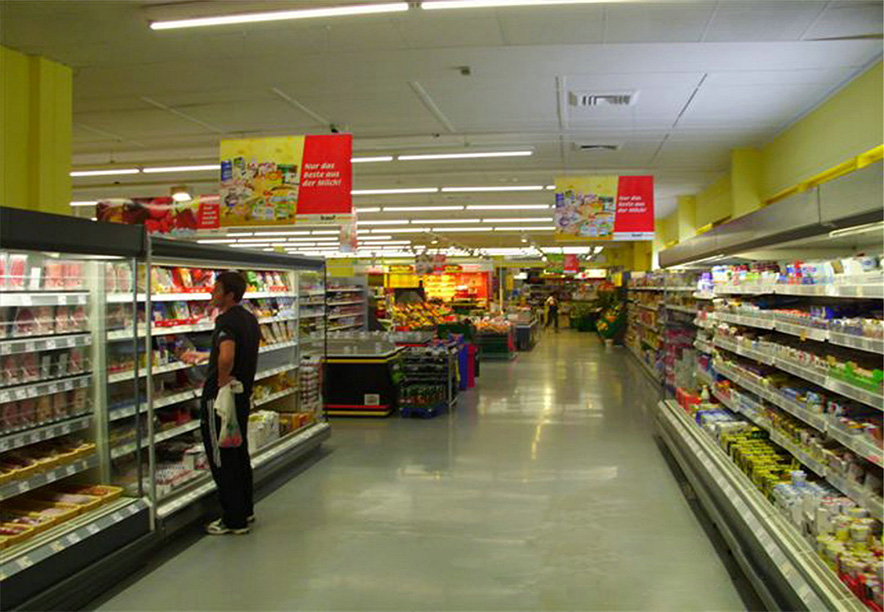
| Supermarkets | 30–50 fc | 300–500 lux | Vertical illuminance on shelves critical |
| Show windows | 50–100 fc | 500–1000 lux | Dramatic contrast with surroundings |
The quantity and quality of illumination, the impression it creates about the merchandise, and the effect it has on the retail area’s appearance are all factors in a successful sale. Lighting at the point of sale should enable the customer to make a final decision and easily locate the sales register.
Hospitality:
| Space Type | Recommended Illuminance (fc) | Recommended Illuminance (lux) | Special Considerations |
|---|---|---|---|
| Hotel lobbies | 20–30 fc | 200–300 lux | Layered lighting, warm CCT |
| Restaurant dining areas | 10–20 fc | 100–200 lux | Dimming essential, 2700–3000K |
| Hotel guest rooms | 20–30 fc | 200–300 lux | Task lighting at desk, reading lamps |
| Conference/banquet spaces | 20–50 fc | 200–500 lux | Flexible dimming and scene control |
Educational:
| Space Type | Recommended Illuminance (fc) | Recommended Illuminance (lux) | Special Considerations |
|---|---|---|---|
| Classrooms | 30–50 fc | 300–500 lux | Whiteboard illuminance 500+ lux |
| Libraries | 30–50 fc | 300–500 lux | Task lighting at reading areas |
In commercial spaces—particularly retail and supermarkets—vertical illuminance (light on product faces and shelves) is equally important as horizontal illuminance (light on the floor). ANSI/IES RP-2-20 emphasizes both horizontal and vertical illuminance along with uniformity recommendations.
For retail shelving: Top shelves receive more light than lower shelves if fixtures are not designed with asymmetric distributions or supplementary lighting.
Uniformity is the ratio of minimum illuminance to average illuminance in an area:
General commercial: 2:1 to 3:1 maximum/minimum ratio
Office task areas: ≤ 3:1
Retail displays: ≤ 5:1 for merchandise areas
In commercial environments, light output declines over time due to lumen depreciation and dirt accumulation. Design should account for a maintenance factor of 0.70–0.85, depending on the environment cleanliness level.
Commercial lighting requires careful optical design to deliver light precisely where it is needed:
| Distribution Type | Beam Angle | Best Application |
|---|---|---|
| Narrow (Spot) | 15°–30° | Accent lighting, retail displays, art illumination |
| Medium | 40°–60° | Task lighting, general office, downlights |
| Wide (Flood) | 60°–90° | Ambient lighting, open-plan offices, corridors |
| Batwing | Asymmetric | Office linear luminaires – maximizes spacing while maintaining uniformity |
The IES recommends a layered lighting approach for commercial spaces:
Ambient (General) Lighting – Provides uniform base illumination
Task Lighting – Focused light for specific work activities
Accent Lighting – Draws attention to merchandise, architecture, or features
Decorative Lighting – Enhances aesthetics and brand identity
Layered lighting addresses the diverse needs of multifunctional commercial spaces while enabling energy savings through selective dimming and zoning.
Glare is a significant concern in commercial environments—particularly in offices with computer screens and retail spaces with reflective merchandise.
Strategies for glare control:
Specify luminaires with proper shielding angles (≥30° for office tasks)
Use diffusers or micro-prismatic lenses to scatter light
Ensure UGR < 19 for retail–, UGR < 22 for offices
Position luminaires to avoid direct line-of-sight to light sources
IES files (ANSI/IES LM-63 format) are the industry-standard photometric data files that describe a luminaire’s three-dimensional light distribution. These files are essential for:
Lighting design and simulation using DIALux or AGi32 software
Comparing luminaire performance across manufacturers
Verifying compliance with design specifications
DLC and ENERGY STAR submissions
Quality indicator: A reputable manufacturer should provide IES files for all optical configurations upon request.
Lighting controls have become mandatory rather than optional in commercial buildings. ANSI/IES LP-6-25 provides comprehensive guidance on control system selection and specification. The standard notes that networked lighting is expected to account for over 45% of commercial building lighting energy savings potential by 2035.
ANSI/IES LP-6-25 categorizes control systems into three types:
| Control Type | Communication Range | Typical Components | Best Application |
|---|---|---|---|
| Standalone | None (device internal) | Wall switch, built-in sensor luminaire | Small storage rooms, equipment rooms |
| Room/Zone Control | Within room | Occupancy sensor + dimmer + control panel | Private offices, conference rooms, small open areas |
| Networked Control | Building/campus-wide | DALI bus, wireless gateway, central server | Large offices, shopping malls, industrial facilities |
Daylight Harvesting: Photosensors monitor space illuminance and automatically dim electric lighting to maintain target levels. Calibrated correctly, this can reduce electrical power from 100% to 22%, saving approximately 30% energy.
Occupancy Sensing: PIR (passive infrared) and ultrasonic sensors detect presence and automatically switch or dim lights when spaces are unoccupied. A classroom installation with dual-technology sensors achieved 40% annual energy savings.
Scene Control and Tunable White: Scene control allows one-touch recall of preset lighting combinations. Tunable white enables independent control of CCT—hospital patient rooms can automatically switch between warm and cool CCT to support circadian rhythm recovery.
Scheduled Dimming: Reduces output during non-peak hours, delivering 20–35% energy savings.
| Protocol | Type | Application |
|---|---|---|
| 0–10V | Analog | Industry standard, widely compatible |
| DALI | Digital | Networked lighting, individual addressing |
| Zigbee | Wireless | Residential and commercial wireless control |
| Bluetooth Mesh | Wireless | Retrofit and flexibility |
| IP-based | Network | Enterprise-level, cloud-connected systems |
ANSI/IES LP-6-25 Appendix B lists over 30 control protocols. For commercial applications, DALI and networked IP-based systems are increasingly preferred for their scalability and integration with building management systems.
DLC V5.1 requires virtually all indoor commercial luminaires to be dimmable. This ensures that energy-efficient lighting can be further optimized through intelligent control strategies.
The smart lighting market is projected to reach approximately $11.57 billion in 2025, growing to $21.94 billion by 2029—a compound annual growth rate of 17.7%. Integration of IoT, AI, and human-centric design has made tunable white and other personalization features standard in premium commercial applications.
| Test Type | Standard | Purpose |
|---|---|---|
| Photometric testing | IES LM-79 | Total flux, efficacy, distribution, CCT, CRI |
| Lumen maintenance | IES LM-80 + TM-21 | Long-term lumen depreciation prediction |
| Color consistency | — | SDCM verification, color shift over time |
| Electrical safety | UL/ETL, CE, ENEC | Insulation, grounding, dielectric strength |
| Glare measurement | UGR calculation | Visual comfort verification |
| Thermal testing | — | Performance under temperature extremes |
| Dimming compatibility | — | Flicker-free dimming, control protocol compliance |
| Market | Required Certifications | Recommended |
|---|---|---|
| North America | UL / ETL | DLC (V5.1/V6.0), ENERGY STAR |
| European Union | CE | ENEC, ENEC+ |
| Australia | SAA | — |
| China | CCC | CQC, Energy Conservation |
DLC SSL V5.1 requires spectral quality reporting including TM-30 and R9 values–. The average efficacy of DLC-listed products has increased by 70% since the program began in 2011.
When evaluating a commercial LED lighting manufacturer, look for:
In-house testing laboratory – CNAS-accredited or equivalent
Traceability – Batch-level testing records and serialized production
Warranty – 3–5 years minimum for commercial products
Documentation – IES files, LM-80 reports, test certificates available upon request
DLC QPL listing – Verified performance, not just claimed specifications
| Traditional Technology | Typical Wattage | LED Replacement | Energy Savings |
|---|---|---|---|
| T8 Fluorescent (4-lamp troffer) | 128W | 40–50W LED troffer | 60–70% |
| T5 Fluorescent (linear) | 54W per lamp | LED linear (equivalent output) | 50–60% |
| Metal halide (retail display) | 175W | 40–60W LED track/spot | 65–75% |
| Incandescent downlight | 65W | 8–12W LED downlight | 80–85% |
Shopping mall public area retrofit: A 4-story shopping mall replaced 12–15W conventional LED downlights with 5.5W ultra-high-efficacy LED downlights. The project replaced 3,000 luminaires, achieving 59% energy savings—annual electricity savings of 105,000 kWh and cost savings of $9,660 per year.
Parking garage retrofit: A commercial parking garage retrofit achieved over 86% energy savings, with lighting quality improving by 25% and over $2 million in electricity costs saved over 6 years.
Warehouse store retrofit: A major retail warehouse achieved 86.6% energy savings with intelligent LED lighting, with power consumption dropping from 15W to 2W per fixture—annual savings of 284,700 kWh and $227,760.
| Aspect | Key Considerations |
|---|---|
| Space Type | Office / Retail / Hospitality / Educational / Healthcare |
| Standards | IES LM-79/LM-80, ANSI/IES RP-1 (office), RP-2 (retail), DLC, ENERGY STAR |
| Efficacy | ≥130 lm/W standard; ≥150 lm/W premium |
| CCT | 4000K (office); 3000–4000K (retail); 2700–3000K (hospitality) |
| CRI | ≥80 minimum; ≥90 for premium retail and color-critical applications |
| UGR | <19 for retail–; <22 for offices |
| Power Factor | ≥0.90 (≥0.95 preferred) |
| L70 Lifetime | ≥50,000 hours recommended |
| Color Consistency | ≤7 SDCM standard; ≤5 SDCM premium |
| Controls | Dimming mandatory (DLC); daylight harvesting, occupancy sensing, scene control |
| Certifications | UL/ETL (NA), CE/ENEC (EU), SAA (AU), CCC (CN), DLC, ENERGY STAR |
| Documentation | IES files, LM-80 reports, test certificates, warranty terms |
| Layered Lighting | Ambient + Task + Accent + Decorative |
| Maintenance Factor | 0.70–0.85 depending on environment |
| Energy Savings | LED vs. fluorescent: 50–70%; LED vs. incandescent: 80%+ |
This guide is intended as a technical reference for specifiers, facility managers, architects, and procurement professionals. For project-specific recommendations, consult with your LED lighting manufacturer or a qualified lighting designer.
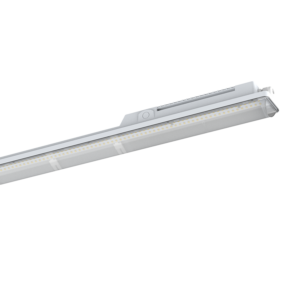
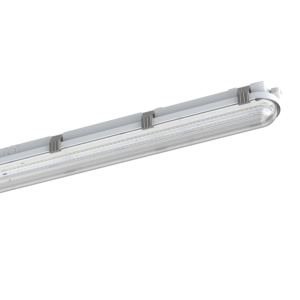
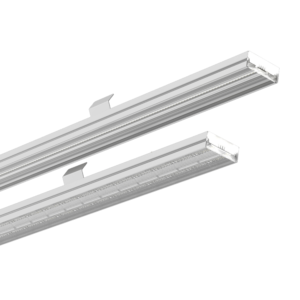
With a seasoned R&D team and extensive real-world application experience, MasonLED holds a distinct edge in delivering tailored lighting solutions to a global customer base. Our capabilities span both industrial and commercial sectors, as well as general and intelligent lighting applications.
We have successfully executed customized LED lighting projects for diverse applications, including:
Transit & Infrastructure – Metro and roadway lighting
Retail & Display – Advertising signage and refrigerator/freezer lighting
Food & Agriculture – Specialty lighting for meat and produce displays
Warehousing & Logistics – High-bay and industrial storage lighting
These projects have been deployed across Australia, Germany, France, the United States, and other key markets, demonstrating our ability to meet varied regional standards and performance requirements.
ODM/OEM Capabilities
Our comprehensive manufacturing infrastructure and engineering expertise position us as a reliable partner for both ODM (Original Design Manufacturing) and OEM (Original Equipment Manufacturing) projects. We excel in:
Concept-to-production – From initial design and prototyping to mass production and delivery
Full customization – Optical, mechanical, electrical, and thermal design tailored to your specifications
IP protection – Strict confidentiality agreements to safeguard your proprietary designs
Flexible scaling – Pilot runs to container-load orders with consistent quality assurance
Whether you require a standard product modification or a completely new design, MasonLED provides the technical depth and operational capacity to bring your vision to market.
R&D & Innovation
The company’s R&D department has years of experience in LED lighting product development and is proficient in the operation processes of various ODM/OEM projects. It can efficiently meet customized customer requirements, ensuring an optimal balance between product performance, cost, and delivery time.
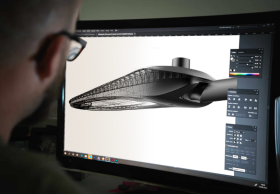
ID design
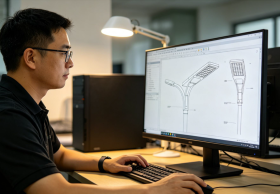
Mechanical engineering
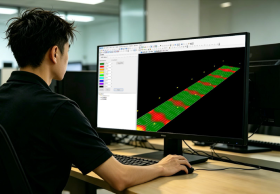
Optical engineering
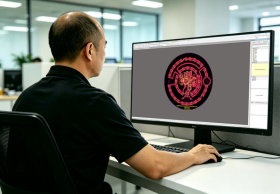
Electronic engineering
Laboratory
We embed quality at every stage of production — from initial design and material sourcing to manufacturing and final testing. Strict in-process inspections, 72‑hour aging, and photometric verification in our CNAS‑accredited lab ensure that every luminaire delivers consistent performance, reliability, and safety — order after order.
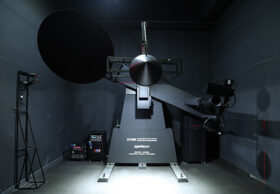
Environmental Reliability Testing
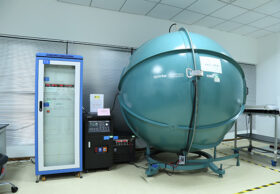
Integrating Sphere Test System
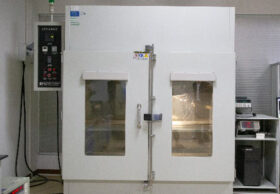
Natural Convection Heating Chamber
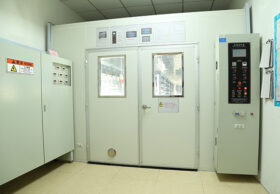
High-Temperature Aging Room
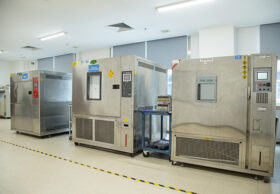
Environmental Reliability Testing
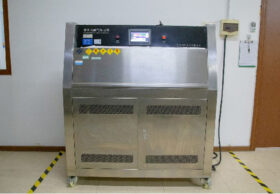
UV Testing Machine
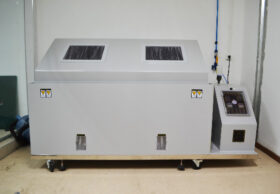
Salt Spray Test Chamber
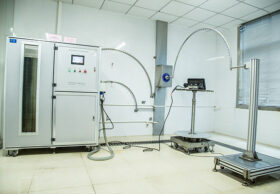
IP waterproof test
Manufacturing Strength
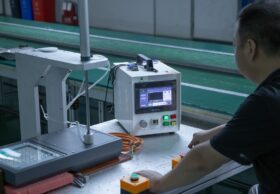
Our production process is built on rigorous quality controls at every stage – from incoming material inspection (IQC) to final testing. Each luminaire must pass 100% air‑tightness testing, 100% hi‑pot (dielectric strength) testing, and 100% burn‑in aging testing, ensuring zero defects in sealing integrity, electrical safety, and long‑term reliability. With these stringent measures, we guarantee flawless performance in every shipment.
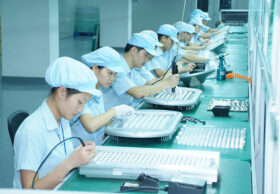
Manufacturing Line
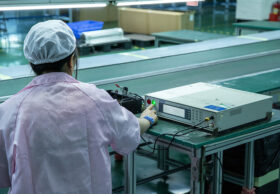
100% High Voltage Withstand Test
100% Air Tightness Test
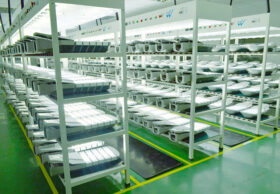
100% Product Aging
Smart warehouse management
With a 5,000㎡ warehousing center at our core, we maintain exceptional material coordination and production flexibility — empowering us to tackle large‑scale municipal projects, adapt to urgent customer demands, and deliver consistent mass production without compromise.
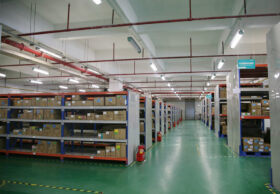
Warehousing center
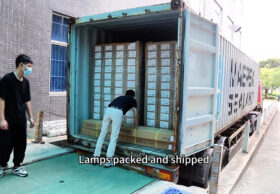
Product Shipping
Outdoor LED Lighting Product Introduction Guangdong Mason Technologies Co., Ltd. is a powerful ODM/OEM manufacturer of industrial and outdoor LED lighting products. Backed by listed
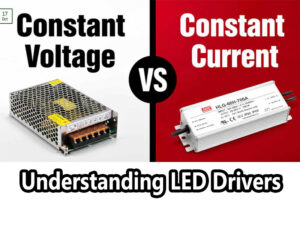
Understanding LED Drivers: Constant Current vs. Constant Voltage — What’s the Difference and How to Choose? Introduction The LED driver is often called the heart
Upgraded ESD-Proof LED Manufacturing Workshop When sourcing durable, high-performance outdoor LED lighting solutions, ORO street lights stand out in the competitive industry with proven field