
Light is not only a tool for illuminating a room, but also the soul of space, a guide to emotions, and a guardian of health. Light is more than just a tool for illuminating a room; it’s the soul of space, a guide to emotions, and a guardian of health. This article will focus on three core concepts: color temperature (CCT), color rendering index (CRI & TM-30), and rhythmic lighting. It will explore their scientific applications in home, office, commercial, medical, hotel, cultural, industrial, and outdoor scenarios, helping you to create a healthier, more efficient, and more beautiful lighting environment.
- Color Temperature and Rhythmic Lighting: The Physiological Language of Light
Color temperature: the code of light’s “warmth” and “coldness”
Color temperature (CCT) is measured in Kelvin (K) and determines the color characteristics of light:
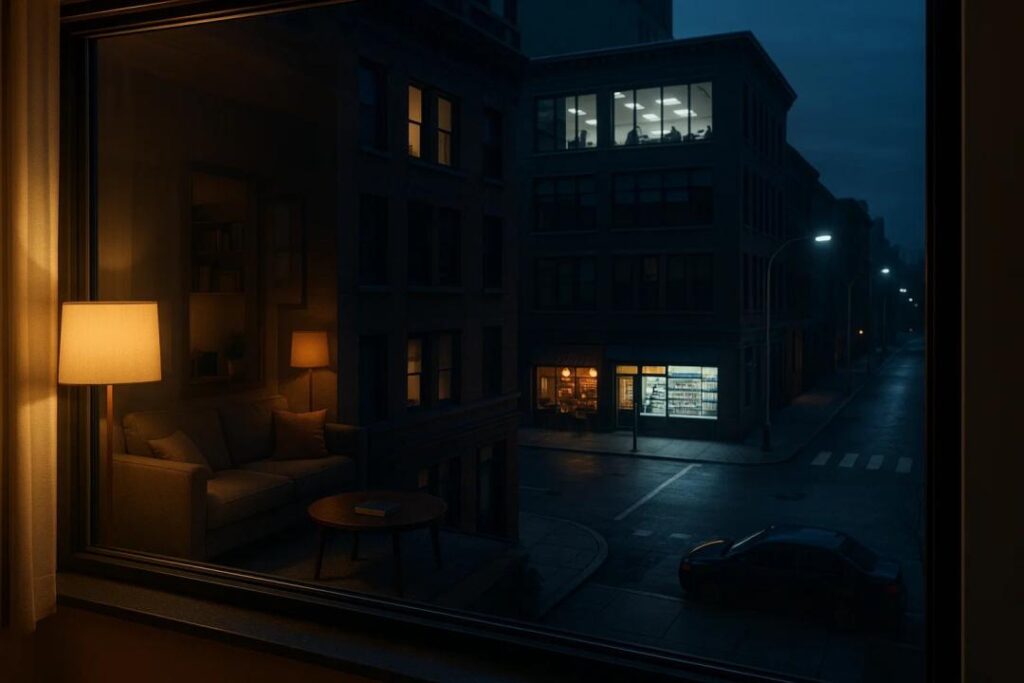
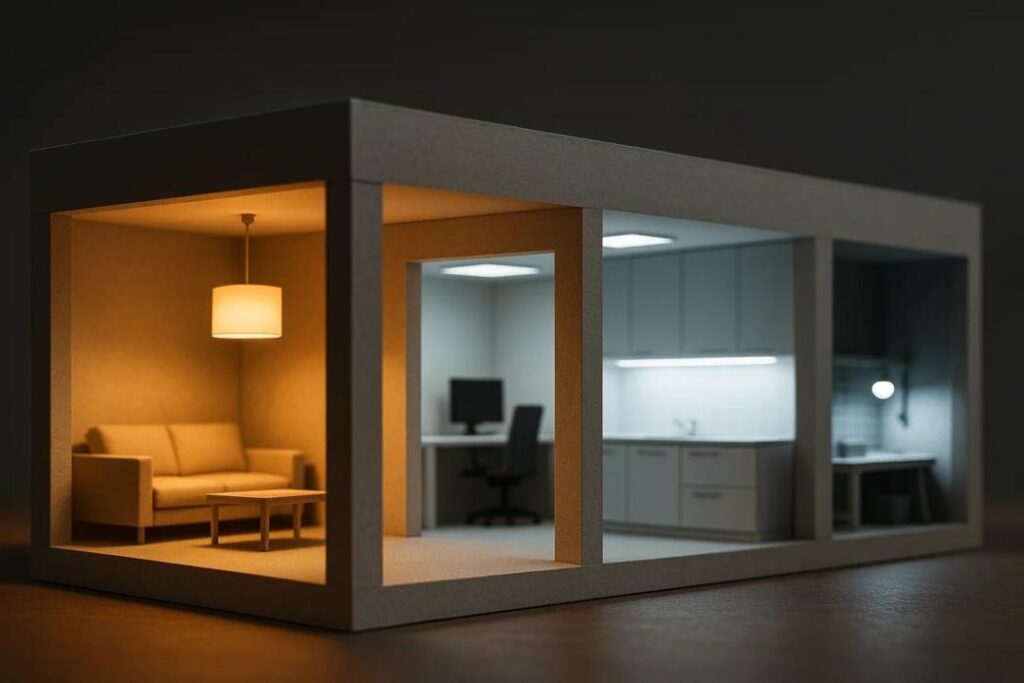
- Warm light (<3300K): such as candlelight (1850K) or incandescent lamp (2800K), creates a warm and relaxing atmosphere, suitable for bedrooms and dining rooms.
- Neutral light (3300K-5300K): close to natural light, soft and comfortable, commonly used in offices and shops.
- Cool light (>5300K): bright and refreshing, stimulates concentration, suitable for sports venues.
Rhythmic lighting: Synchronizing with the human body clock
Light directly influences the body’s circadian rhythm, affecting sleep and wakefulness by regulating melatonin secretion. High color temperatures (rich in blue light) suppress melatonin, making it ideal for morning wakefulness, while low color temperatures promote melatonin secretion, promoting sleep at night. Modern intelligent rhythmic lighting systems can automatically adjust color temperature and brightness according to time:
Time period | Recommended color temperature | Physiological effect |
Early Morning (6-9 AM) | 5000-6500K | Wakes you up and activates your brain. |
Morning (9-12 PM) | 4000-5000K | Improves concentration and productivity. |
Afternoon (1 PM-5 PM) | 3500-4500K | Relieves fatigue and stabilizes mood. |
Evening and Night time | 2700-3000K | Relaxes the mind and body and promotes sleep. |
Rhythmic lighting has been widely used in smart homes, office buildings, schools and nursing homes, helping to improve both health and efficiency.
- Color rendering: let the color return to reality
Color rendering determines the ability of a light source to restore the true color of an object, and directly affects the visual experience and spatial texture.
- Traditional color rendering index, Ra>80 is the basic requirement, Ra>90 is a high color rendering light source.
- Specifically measures the ability to restore red (such as skin color and meat), which is particularly critical in retail and medical scenarios.
- This new international standard uses Rf (color fidelity) and Rg (color saturation) to more accurately evaluate light source performance. Light sources with Rf > 90 and Rg ≈ 100 produce natural, rich colors.
For example: at a cosmetics counter, if the light source has a high Ra but a low R9, the skin may appear dull; a light source with high Rf & Rg can make the skin tone realistic and vivid, improving the purchasing experience.
- Full-Scene Lighting Strategy: Light Environment Design from Home to City.
- 3.1 Home space: comfort and health are equally important.
Home is the harbor of life, and lighting must take functional, aesthetic and physiological needs into account.
Area | Recommended color temperature | Color rendering suggestions | Design Points |
Bedroom | 2700-3000K | Rf>80, R9>0 | Warm light helps you sleep and avoids high blue light. |
Living room | 3000-4000K | Rf>90, Rg≈100 | Bright and cozy, with adjustable warm light at night. |
Dining room | 2500-3000K | Rf>90, R9>50 | Warm light enhances the color and atmosphere of food. |
Study room | 3500-4000K | Rf>85 | Neutral light with high illumination protects the eyes. |
Children’s Room | 3000-4000K | Rf>90 | Dynamically adjust color temperature according to your daily routine. |
Smart trend: Through the rhythmic lighting system, the living room or study can automatically switch the color temperature according to the time, such as 5000K refreshing in the morning and 2700K relaxing at night.
- 3.2 Office and Education: Catalysts for Efficiency and Focus.
Office and education scenarios need to improve efficiency through light while paying attention to visual health.
Area | Recommended color temperature | Color rendering suggestions | Design Points |
Office area | 4000-5000K | Rf>85 | Neutral light improves concentration and reduces fatigue. |
Meeting room | 5000-6500K | Rf>90 | Cold light stimulates efficient decision-making. |
Class room | 5000-6500K(morning) | Rf>85 | Dynamic adjustment to suit students’ status. |
Recommendation: Use anti-glare lamps to avoid shadows and ensure comfort when working or studying for long periods of time.
- 3.3 Commerce and Retail: Light Tells Brand Stories.
Retail lighting needs to be consistent with the brand tone and highlight the attractiveness of the products.
Area | Recommended color temperature | Color rendering suggestions | Design Points |
High-end retail area | 3000-4000K | Rf>90, R9>50 | Highlight the texture of the product and the real skin color. |
Fresh food area | 3000-3500K | Rf>90, R9>80 | High R9 ensures bright red meat and fruit attractive. |
Cosmetics counter area | 3500-4500K | Rf>95, Rg≈100 | Prevent color cast from misleading purchasing decisions. |
Dining area | 2500-3000K | Rf>90 | Warm light creates a warm and inviting atmosphere. |
Case: High-end clothing stores use 3000K warm light + Rf>90 to highlight the texture of fabrics; fresh supermarkets use high R9 light sources to make meat and fruits more attractive.
- 3.4 Medical care and health: a balance between precision and comfort.
Medical lighting must balance diagnostic accuracy and patient comfort.
Area | Recommended color temperature | Color rendering suggestions | Special notes |
Treatment area | 5000-5700K | Rf>90, R9>90 | High color rendering ensures accurate skin color and tissue. |
Ward | 2700-3500K | Rf>90 | Warm light creates a sense of home and aids recovery. |
Operating room | 5000-5500K | Rf>95, R9>95 | Meet strict medical lighting standards. |
Health care institutions | Dynamically adjustable | Rf>85 | Rhythmic lighting promotes health management. |
Recommendation: The ward can be equipped with low illumination (about 100 lx) warm light to enhance the patient’s sense of relaxation.
- 3.5 Hotels and leisure: creating mood light environments.
Hotel lighting needs to create a unique experience through light.
Area | Recommended color temperature | Color rendering suggestions | Design Points |
Lobby | 3000-4000K | Rf>90 | Comfort and trust, highlighting the brand tone. |
Guest room | 2700-3000K | Rf>85 | Private relaxation, multiple light positions switching. |
SPA/Bar | 2200-2700K | Rf>90 | Warm light + hidden light strips enhance the atmosphere. |
Multi-purpose Hall | Dynamically adjustable | Rf>85 | DALI system realizes scene linkage control. |
Trend: Hotel multi-function halls use adjustable color temperature systems to flexibly cope with scenes such as meetings and banquets.
- 3.6 Culture and Exhibition: the art of restoration and protection.
Museums and art spaces need to balance cultural heritage protection and color presentation.
Area | Recommended color temperature | Color rendering suggestions | Notes |
Museum showcase | 2700-3000K | Rf>95, R9>80 | Low blue light protection for cultural relics. |
Gallery | 3000-4000K | Rf>95 | Locally adjust Rg to enhance color tension. |
Stage/Theatre | 3200-5600K | Ra>90, R9>50 | Flexible switching of multi-spectrum lamps. |
Churches/Historic Buildings | 2200-3000K | Rf>90 | Create a sense of tranquility and sacredness. |
Case: Blue and white porcelain exhibits require a 5000K high color rendering light source to present a blue hue, but the proportion of blue light needs to be controlled to protect the cultural relics.
- 3.7 Industry and outdoor: safety and efficiency first.
Industrial and outdoor lighting is centered around functionality and safety.
Area | Recommended color temperature | Color rendering suggestions | Precautions |
Factory floor | 4000-5000K | Rf>80 | Avoid glare and focus on long-term health. |
Warehousing and logistics | 5000K | Rf>80 | Ensure clear movement lines and even light and shadow. |
Street lighting | 4000K | CRI>70 | Balancing visibility and public safety. |
Parks/Landscapes | 2700-3000K | CRI>80 | Warm light creates a gentle night atmosphere. |
Parking lot | 4000K | Rf>80 | Anti-glare + area sensing control. |
Recommendation: Urban lighting needs to have a unified color temperature to avoid mixing of street and sidewalk light sources and create a harmonious night scene.
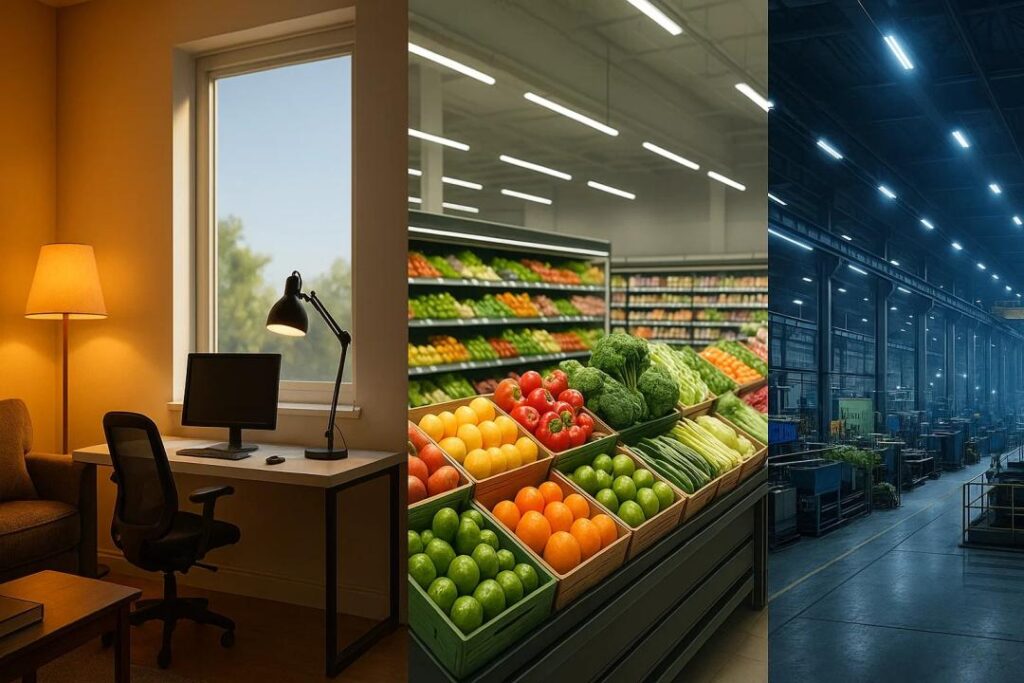
- Future outlook: the era of intelligent lighting environment
Ideal lighting design is a comprehensive decision-making process that balances safety > functionality > comfort > aesthetics. With the popularization of the TM-30 standard, the integration of rhythmic lighting systems and Internet of Things (IoT) technology, future lighting will become smarter and more humane.
- Dynamic adjustment: light automatically adjusts according to time, scene and human needs.
- Data-driven: Sensors perceive the environment in real time and optimize the light environment.
- Health-oriented: Synchronize with human body rhythm to improve sleep quality and work efficiency
Light will become the “nervous system” of buildings, illuminating not only the space but also our lives.
Let light understand people better.
Light is not just a tool, but a bridge connecting people, space and time. Scientific lighting design can make employees more efficient, customers more trustworthy, patients more at ease, and the city more cozy. I hope you can use light to illuminate infinite possibilities, whether you are creating a warm home or designing an efficient office space.