
Table of Contents
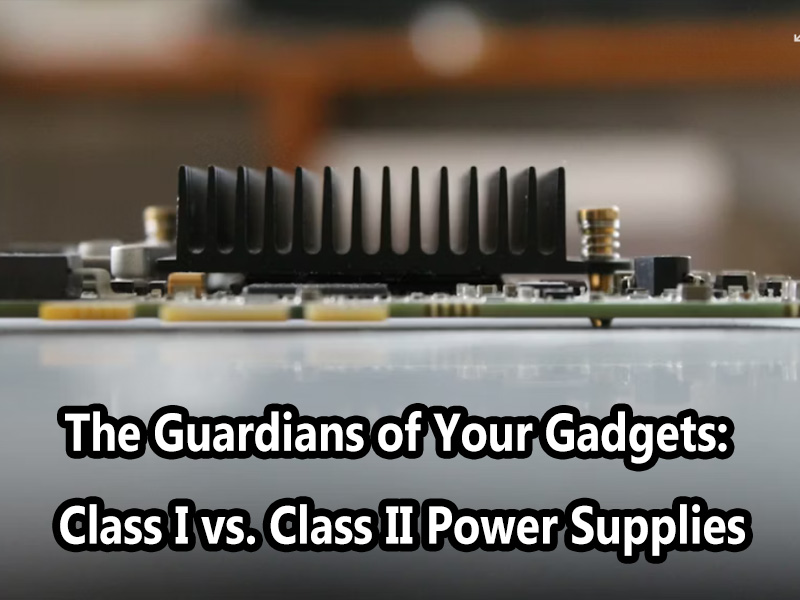
ToggleThe Guardians of Your Gadgets: Class I vs. Class II Power Supplies
Three Prongs or Two? It’s a Safety Thing
Look at the plugs around you. Some have three prongs, some have two. That third prong isn’t just for show—it reveals how your device protects you from electric shock. Let’s meet the two bodyguards behind your wall outlet.
Class I: The Grounded Guardian
Three-prong plug (Live, Neutral, Earth) | Metal housing typical
How it works: Relies on basic insulation + a ground wire. If a fault connects live voltage to the metal case, the ground wire provides a safe path for current, tripping the breaker instantly.
Best for: High-power gear, industrial equipment, desktop PCs—anywhere reliable grounding exists and metal cases need protection.
Achilles’ heel: If your outlet isn’t properly grounded, the protection fails.
Class II: The Self-Sufficient Shield
Two-prong plug (Live, Neutral only) | Plastic housing typical
How it works: No ground needed. Uses double or reinforced insulation—two independent insulating layers or one super-strong layer. Even if the first layer fails, the second blocks danger.
Best for: Phone chargers, laptops, portable devices, home-use medical equipment—anywhere grounding can’t be guaranteed.
Achilles’ heel: Harder to implement at very high power levels
Quick Comparison
Feature | Class I | Class II |
Safety Strategy | Basic insulation + Grounding | Double/Reinforced insulation |
Input | 3 wires (L, N, Earth) | 2 wires (L, N) |
Housing | Metal (conductive) | Plastic (insulating) |
Power Range | Excellent for high power | Better for low/medium power |
Portability | Tied to grounded outlets | Works anywhere |
Which One Should You Choose?
Simple rule: Match your system’s class.
Choose Class I when: Your equipment has a metal enclosure, needs high power (hundreds+ watts), or is in a professionally grounded environment.
Choose Class II when: Your device is portable, used in homes with uncertain grounding, needs a waterproof sealed enclosure, or is designed for home medical use.
Critical Warning: Don’t Confuse These!
IEC Class II (insulation protection) is NOT the same as UL Class 2 (limited power output for fire safety).
They sound alike but address completely different safety aspects. Always check the datasheet!
The Bottom Line
Both keep you safe—just differently. Class I calls for backup (ground). Class II is its own fortress (insulation).
Next time you plug something in, look at the prongs. You’ll know exactly which guardian is watching over you.
Which devices in your home surprised you? Share in the comments!