
In outdoor scenes such as urban roads, residential courtyards, and rural streets, street lights, as the core lighting equipment, are not only related to the safety of traffic at night, but also affect the environmental atmosphere and energy consumption. Today on the market a variety of street lamp types, from the traditional high-pressure sodium lamp to modern LED street lamp, from ordinary lighting to intelligent control, how to pick out the adaptation scene, cost-effective products? This article will be from the street lamp product introduction, type comparison, performance evaluation, user experience and other aspects, to provide you with a comprehensive reference to buy.
Comparison of 1: street lamp core types and product features: which is more suitable for your scene?
At present, the mainstream street lights are mainly divided into traditional street lights and LED street lights, different types in the light source, energy consumption, life and other aspects of the difference is significant, the adaptation of the scene also has a focus. The following is a detailed analysis of product features and applicable scenarios, some popular products can click on the link to view the details page.
- Traditional high pressure sodium lamp street lamp
Product features: high-pressure sodium lamp as the light source, the light is warm yellow, strong penetrating power, in rainy and foggy weather can reduce visual interference; mature technology, early outdoor lighting is widely used.
Usage: start with ballast, pay attention to line matching during installation, usually pole type installation (the height of the lamp pole is mostly 6-12 meters), and replace the bulb regularly during maintenance (once every 1-2 years on average).
Precautions: slow starting speed (it takes 3-5 minutes to reach rated brightness), high energy consumption (400W specification high pressure sodium lamp, actual power consumption is about 450W), short service life (average service life is 8000-12000 hours), and harmful substances such as mercury need professional treatment after disposal.
Applicable scenes: scenes with low brightness requirements and limited budget, such as rural roads and old residential areas.
- Ordinary LED street lamp
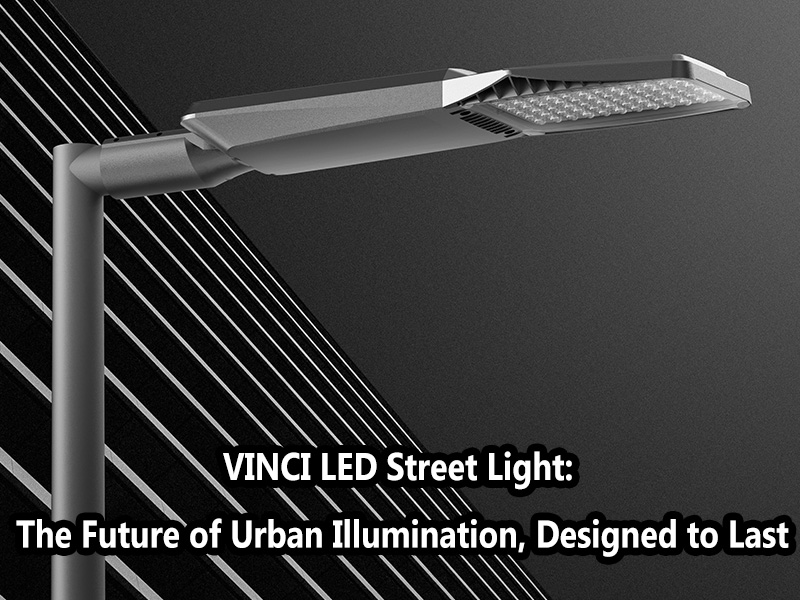
Product features: LED is used as the light source, the light color is optional (warm white 3000K-4000K, positive white 5000K-6000K), and the brightness is stable; Low energy consumption (more than 50% energy saving than high pressure sodium lamp under the same brightness), long service life (average service life 30000-50000 hours), instantaneous lighting at startup, no mercury pollution.
Usage: built-in drive power supply, no additional ballast, simplified installation process, support pole type, wall-mounted installation (pole height 3-15 meters optional), low maintenance frequency (5-8 years without replacing the light source).
Note: Pay attention to the heat dissipation design (poor heat dissipation of inferior products is easy to cause light attenuation). When purchasing, confirm the IP waterproof grade (IP65 and above are recommended for outdoor use) to avoid long-term use of unprotected products in high temperature and high humidity environments.
Applicable scenarios: medium lighting demand scenarios such as urban secondary roads, community main roads, park trails, etc.
- Intelligent LED street lamp
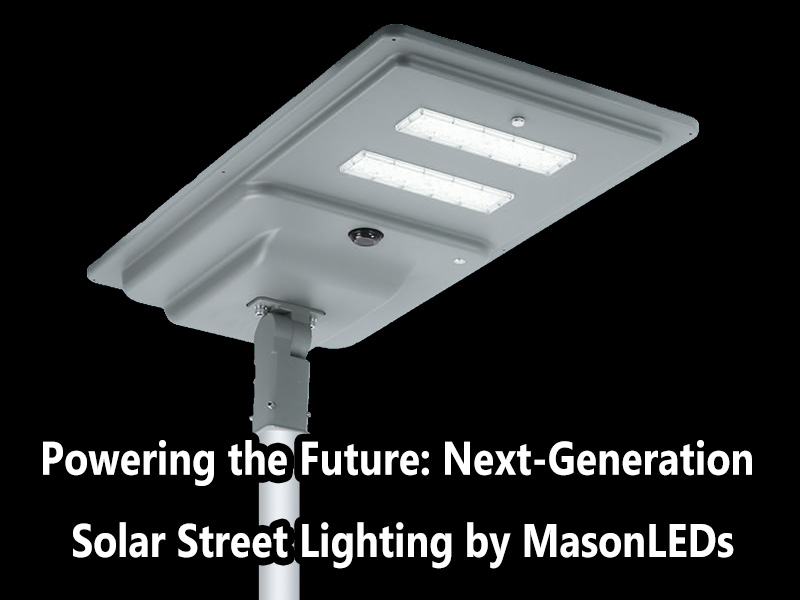
Product Features: By adding intelligent modules to standard LED streetlights, a comprehensive intelligent lighting control system is formed. It supports light-sensing control (automatically switching lights based on ambient brightness), human-sensing (increasing brightness when a person passes by and dimming when no one is present), and remote monitoring (checking operational status and receiving fault alarms via an app). Some products can also integrate charging piles and WiFi hotspot functions, further enhancing the utility of the smart lighting control system.
Usage: The system needs to connect to an Internet of Things (IoT) platform. During installation, communication modules (such as LoRa and NB-IoT) must be configured. It supports automatic debugging and allows for remote parameter adjustments (such as lighting schedules and brightness levels) via a backend management platform.
Note: The initial purchase cost is relatively high. Stable communication signals are required (remote areas may experience weak signal issues), and the intelligent modules require regular maintenance to prevent software failures.
Applicable Scenarios: Urban arterial roads, commercial districts, smart parks, and other settings with high demands for intelligent lighting and energy conservation.
Comparison of 2: Street Lamps of the Same Type: Data Analysis Helps You Choose the Best
To more intuitively compare the performance of different streetlight types, we provide a quantitative evaluation across key dimensions: power, brightness, energy consumption, lifespan, and cost. The following table data is based on measured results from mainstream products in the market.
Type of street lamp
| Rated power
| luminous flux (lm) | Annual power consumption (10 hours per day)
| Average Life (hours)
| Initial purchase cost (single set, including poles)
| Average annual maintenance cost
| 5 years total cost (purchase energy consumption maintenance)
|
Traditional high pressure sodium lamp street lamp (400W) | 400W | 24000 | 1460 degree(0.45kW×10h×365 day) | 10000 | 800-1200 元 | 150-200 ¥ | 800+(1460×0.6)×5 + 150×5 = 5730 ¥ |
Ordinary LED street lamp (180W) | 180W | 25200 | 657 degree(0.18kW×10h×365 days) | 40000 | 1200-1800 ¥ | 30-50 ¥ | 1200+(657×0.6)×5 + 30×5 = 3271 ¥ |
Intelligent LED street lamp (200W, with induction function)
| 200W (maximum brightness)/ 50W (low brightness)
| 28000 (high)/ 7000 (low)
| 328.5 degree((200×4h + 50×6h)÷1000×365 days,Calculated by 4 hours of high brightness and 6 hours of low brightness per day)
| 50000 | 2500-3500 ¥ | 80-120 ¥ | 2500+(328.5×0.6)×5 + 80×5 = 3685.5 ¥ |
From the table data, it can be seen that the ordinary LED street lamp has obvious advantages in the total cost of 5 years, which is about 43% less than the traditional high-pressure sodium lamp. Although the initial cost of intelligent LED street lamp is high, it further reduces energy consumption through brightness adjustment, which is suitable for scenes with demand for intelligence. If the scene lights up for a long time every day (such as more than 12 hours), the energy-saving advantages of intelligent LED street lights will be more prominent.
user experience and real comments: from the user’s point of view the advantages and disadvantages of street lamps
We have collected feedback from users on the use of three types of street lights in different scenarios, starting from the actual experience, analyzing the advantages and disadvantages of the product, and providing reference for your purchase.
① Traditional high pressure sodium lamp street lamp user reviews
-Rural road user Mr. Zhang: “Our village uses a 400W high-pressure sodium lamp, the night road warm yellow light looks quite comfortable, rainy and foggy days can also see the road. Is every year have to ask people to change the light bulb, sometimes the light bulb is broken not timely change, night road is a bit dangerous. And the electricity bill seems to be much higher than the village next door with LED lights.”
- Community property manager Wang: “We used to use high-pressure sodium lamps in our community. After using them for three years, half of the bulbs were broken, which was troublesome and expensive to replace. Later, considering the cost, we gradually replaced them with LED lamps, but now there are not so many maintenance matters.”
② Ordinary LED Street Light User Reviews
-City secondary road merchant Ms. Li: “After the street lights at the door were replaced with LED lights, the door of the store was much brighter at night, and the guests said it looked safer and business was a little better. And listen to the municipal people say, this light is more energy-efficient than before, for our merchants also have no impact, very good.”
- Park manager Mr. Zhao: “The park trail is equipped with a 6-meter-high LED street lamp, the brightness is just right, and the people who walk at night are clear. It has been 4 years, and there has not been a broken lamp, which saves a lot of maintenance effort. There are just a few lamps installed by the lake, and there is a lot of rain in summer, so I am worried about waterproofing, but there is no problem at present.”
③ Smart LED Street Light User Reviews
Director Liu of Smart Park Operation: “Our park is equipped with intelligent LED street lamps. We can see the status of each lamp through the background. Which lamp is broken will automatically alarm without manual inspection, thus saving a lot of manpower. Moreover, it will automatically dim when there is no one at night, turn off the lights when the brightness is enough during the day, and save the electricity bill by half as much as before. It took some time to debug the communication module when it was first installed, and the light signals in remote corners were occasionally unstable.”
-Commercial district owner Mr. Chen: “the block of intelligent street lights can also be used as a charging pile, sometimes customers to go shopping, electric cars without electricity can be charged on the roadside, quite convenient. Brightness is enough, the night block looks very lively, business is better than before. Just heard that this lamp is much more expensive than ordinary LED lights, but the block unified money, we merchants did not worry about the cost.”
- FAQ: Solve your doubts about buying street lights
- How to choose the height of the lamp pole of the street lamp?
Answer: The height of the light pole should be determined according to the width and demand of the lighting scene. Rural roads and residential trails (width 3-5 m) can be 6-8 m light poles; Urban secondary roads and residential main roads (width 5-8 m) can be 8-10 m light poles; Urban main roads and commercial blocks (width 8-12 m) can be 10-12 m light poles. If the scene is blocked by trees, the height of the light pole can be appropriately increased or the street lamp with large polarization angle can be selected.
- Outdoor street lamp waterproof grade choose how many appropriate?
Answer: Outdoor street lamp is recommended to choose IP65 and above waterproof grade. IP65 means completely dustproof and can resist low-pressure water spray in any direction (such as rainy days); If the street lamp is installed in the scene that is easy to be splashed by water such as lake and river, or in rainy areas, IP67 grade can be selected (it can be soaked in 1 m deep water for a short time) to prevent rainwater from entering the interior and causing failure.
- Do intelligent LED street lights need to be connected to the Internet? Can it still be used if the network is cut off?
Answer: Smart LED street lights need to be networked (usually through low-power networks such as LoRa and NB-IoT) to achieve remote control and status monitoring. If the network is cut off, most intelligent street lamps will switch to the local mode and run according to the preset lighting time and brightness (such as light sensing control switch lamp and fixed brightness gear), which will not be completely unusable. After the network is restored, the data can be automatically synchronized to the background.
- How long is the warranty period of street lamps? What warranty terms should I pay attention?
Answer: The warranty period of traditional high-pressure sodium lamp street lamp is more than 1 year (bulb warranty is 6 months); the warranty period of ordinary LED street lamp is usually 2-5 years (light source and drive power supply warranty); the warranty period of intelligent LED street lamp is 3-5 years (including intelligent module). When purchasing, it is necessary to confirm the warranty scope (whether it includes lamp poles and installation accessories) and the maintenance methods within the warranty period (whether it is on-site maintenance and whether it is responsible for freight) to avoid difficulties in safeguarding rights in the later period.
Purchase suggestion: choose the right street lamp according to the scene, taking into account the cost performance and practicality.
- Budget is limited and the scene is simple (such as rural roads and old residential areas): ordinary LED street lamps are preferred, with low energy consumption and low maintenance cost. The total cost in 5 years is more advantageous than traditional high-pressure sodium lamps. 180W-200W specifications are recommended, and the luminous flux is above 25000lm to meet the basic lighting requirements.
- Pursuit of intelligence and energy saving (such as urban main roads, smart parks, and commercial blocks): Select intelligent LED street lamps to further reduce energy consumption through light sensing, human body sensing and other functions. At the same time, remote monitoring functions can reduce maintenance workload. If the scene has charging requirements, you can choose the style of integrated charging pile.
- Special scenes (such as rainy and foggy areas, lakeside and riverside): No matter which street lamp is selected, it is necessary to ensure IP67 and above waterproof grade. LED street lamps need to pay attention to heat dissipation design (such as aluminum shell and heat dissipation fins) to avoid light failure or failure due to humidity and high temperature.
If you have a clear scenario requirements, you can click on the corresponding product details page to view the specific parameters and quotation, you can also contact customer service to obtain customized street lighting solutions.