
When it comes to LED street lighting, the lens is arguably the most critical component that determines how well a luminaire performs. A properly designed lens doesn’t just protect the LED chips—it shapes and directs light to where it’s needed most, ensuring optimal visibility, energy efficiency, and road safety. At MasonLED, we understand that selecting the right lens for your street lighting project can make all the difference. In this guide, we’ll walk you through the various types of LED street light lenses, their materials, optical designs, and how to choose the perfect match for your application.
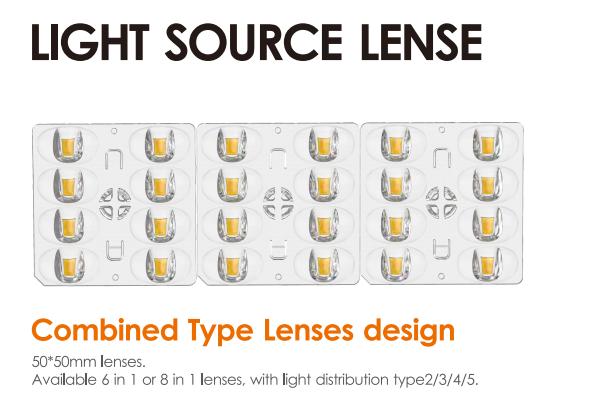
Figure 1: Lens array configuration in MasonLED LINOS series street lights
🌟 What Is an LED Street Light Lens?
An LED street light lens is a specialized optical component designed to optimize light distribution from high-power LED chips. Its primary functions include:
- Controlling light output – Shaping the beam to match specific road geometries
- Improving efficiency – Maximizing light utilization while minimizing waste
- Ensuring uniformity – Eliminating dark spots and harsh glare
- Protecting LEDs – Shielding sensitive chips from dust, moisture, and impact
Without a proper lens, LED street lights would cast uncontrolled, circular beams that waste energy and fail to meet lighting standards. The lens transforms raw LED light into precisely shaped illumination tailored for roadways, pathways, parking lots, and public spaces.
🧱 Lens Materials: PMMA vs. PC vs. Glass vs. Silicone
The material of a lens directly impacts its optical performance, durability, and cost. Here’s how the most common materials compare:
|
Material |
Light Transmittance |
Temperature Resistance |
Key Advantages |
|
PMMA (Acrylic) |
~93% |
Up to 90°C |
Cost-effective, easy to mold, excellent clarity |
|
PC (Polycarbonate) |
~89% |
Up to 130°C |
High impact resistance, better heat tolerance |
|
Glass |
~97% |
Very high |
Best clarity, UV-stable, no yellowing over time |
|
Silicone |
~90-95% |
-40°C to 150°C+ |
Flexible, shatterproof, excellent for harsh environments |
MasonLED Insight: For most street lighting projects, we recommend PC lenses in high-temperature or vandal-prone areas, and PMMA for standard applications where cost is a priority. Silicone lenses are ideal for extreme climates or impact-resistant designs.
🔄 Primary Lens Structures: Refractive vs. TIR
LED street light lenses fall into two main structural categories, each with unique optical characteristics:
1. Refractive (Convex) Lens
The refractive lens works like a traditional magnifying glass—LED light passes through the curved surface and bends (refracts) to converge into a concentrated beam. By adjusting the distance between the LED chip and the lens, engineers can achieve various beam angles from as narrow as 5° to as wide as 80°. This type excels in applications requiring long-distance throw or precise spot illumination.
2. TIR (Total Internal Reflection) Lens
The TIR lens features a conical or cup-shaped design. Light from the LED is collected in two ways: the central portion passes through the front convex surface via refraction, while light emitted at wider angles is captured by the reflective cone and directed forward through total internal reflection. These two light paths overlap to create highly uniform beams with exceptional optical efficiency. TIR lenses are widely used in street lighting to produce batwing-shaped light distributions that deliver excellent road uniformity.
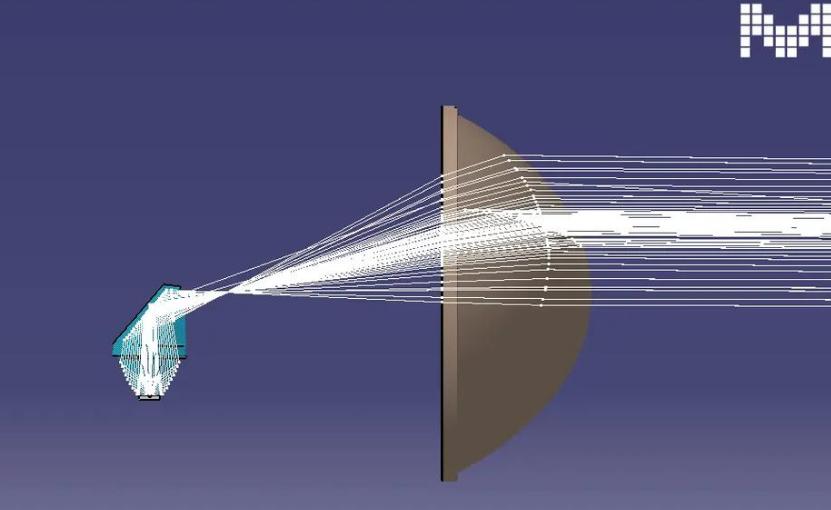
Figure 2: Light path
💡 MasonLED advantage: Our LINOS series street lights feature advanced multi-lens arrays that combine the best of both refractive and TIR technologies, achieving optical efficiency exceeding 90% while maintaining outstanding uniformity.
🛣️ IESNA Light Distribution Types (Type I–V)
The Illuminating Engineering Society of North America (IESNA) has established five standard light distribution types for outdoor luminaires. Understanding these types is essential for selecting the right lens for any road or area lighting project.
|
Distribution Type |
Best Application |
Lateral Coverage (relative to mounting height MH) |
|
Type I |
Sidewalks, bike paths, 1‑lane roadways |
Width < 1.0 × MH |
|
Type II |
Walkways, entrance roads, 2‑lane roads |
Width 1.0–1.75 × MH |
|
Type III |
Roadways, general parking areas, wider roads |
Width 1.75–2.75 × MH |
|
Type IV |
Wall‑mount, perimeter lighting, large parking areas |
Width > 2.75 × MH |
|
Type V |
Intersections, roundabouts, open areas |
360° circular or square distribution |
Quick summary: Type I/II for narrow paths, Type III for most roads, Type IV for wall-mount, and Type V for open area 360° coverage.
📐 Beam Angle & Light Spot Shapes
Beyond distribution type, beam angle and spot shape are critical for real-world performance.
Beam Angle Options
- Narrow (15°–40°): Long throw, high intensity – ideal for high-mast lighting.
- Medium (40°–80°): Balanced for general roadway lighting.
- Wide (80°–120°): Maximum coverage – perfect for residential streets and parking lots.
Spot Shapes
|
Spot Shape |
Best Application |
Key Advantage |
|
Round |
Courtyards, residential areas, pathways |
Simple design, adequate for low‑speed zones |
|
Elliptical |
Bicycle lanes, 1‑2 lane roads |
Reduces dark areas between fixtures |
|
Rectangular |
Highways, multi‑lane roads |
Maximizes light utilization, uniform coverage |
✅ How to Choose the Right LED Street Light Lens
When selecting a lens for your street lighting project, consider these key factors:
- Road Classification – Highways need Type III or IV with rectangular beams; residential streets may only require Type I or II.
- Mounting Height & Spacing – Taller poles and wider spacing require narrower beams to maintain uniformity.
- Environmental Conditions – Coastal areas may favor PC or silicone for corrosion resistance; high‑temperature regions benefit from PC’s 130°C heat tolerance.
- Lighting Standards Compliance – Ensure your chosen lens meets IESNA, CIE, or local road lighting regulations.
- Maintenance & Durability – Consider self‑cleaning features and IP ratings for long‑term reliability.
🏆 Why Choose MasonLED?
At MasonLED, we’ve been manufacturing high‑quality LED lighting solutions for global markets for over a decade. Our product portfolio includes LED street lights, tri‑proof lights, high‑bay lights, and flood lights—all designed with precision optics and rigorous quality control.
Our LINOS series street lights feature interchangeable Type II/III/IV/V lens options, delivering outstanding uniformity and optical efficiency. Each unit undergoes strict photometric testing to ensure compliance with international standards, guaranteeing that your streets, highways, and public spaces receive the illumination they deserve.
📧 Need help selecting the right lens for your next street lighting project?
Contact our team at market@masonleds.com for personalized guidance and free photometric simulations.